FCC Education & Youth
Golftyn Primary School Safeguarding Policy
Model Policy for all primary and secondary school provision including specialist schools and pupil referral unit (PRU). This policy sets out the approach and provision for safeguarding learners in Flintshire.
| Date first implemented | September 2017 |
| Date of last amendment | September 2025 |
| Version | 6 |
| Date of next review | September 2026 |
| Policy owner for review | Learning Advisor – Health, Wellbeing & Safeguarding |
| School | Ysgol Golftyn |
| Date policy approved | This policy was approved by the School’s Governing Body on: September 2025 |
| Review frequency | This policy will be reviewed annually by the head teacher, staff and governors, or if any amendments occur in legislation or in consideration of changes in working practices which may stem from incidents or allegations. |
| Review date | September 2026 |
| Chair of Governors Declaration | N.Cottrell |
| Head teacher Declaration | N.Cooper |
Accessible Formats
This document is available in English and Welsh in Microsoft Word and pdf formats in Arial font size 12 as standard. Other accessible formats including large print, Braille, BSL DVD, easy-read, audio and electronic formats, and other languages can be made available upon request. To request a copy of this document in an accessible format contact the school office.
| School Safeguarding Contact Details | Name | Contact
|
| Designated Safeguarding Person (DSP)
|
Nicola Cooper | 01244 830569 |
| Deputy Designated Safeguarding Person (s)
|
Sharon Kevan | 01244 830569 |
| Headteacher
|
Nicola Cooper | 01244 830569 |
| Designated Governor for Safeguarding
|
Dawn Bayliss | 01244 830569 |
| Chair of Governors
|
Neil Cottrell | 01244 830569 |
Flintshire Key Contact Details
| Children’s Services – Front Door
|
Office hours: 01352 701000
Out of Hours phone number: 0845 0533116
|
| Adult Social Services – Single Point of Access | 03000 858858 |
| Chief Officer, Education & Youth
Claire Homard |
01352 704601 |
| Designated Safeguarding Lead for Education Claire Sinnott
(Learning Advisor – Health, Well-being and Safeguarding) |
07867684653 |
| Senior Manager for Flintshire Youth Justice Service and Sorted
|
01352 702695 / 07909 002014 |
| Senior Learning Advisor – Engagement | 01352 704066 / 07785695823 |
| Senior Education Social Worker
|
01352 704137 / 07876 790250 |
| North Wales Police
|
Emergency: 999
Non-Emergency: 101 |
| ACE’s | Adverse Childhood Experiences |
| UNCRC | United Nations Convention on the Rights of the Child |
| DBS | Disclosure and Barring Service |
| GDPR | General Data Protection Regulations |
| EHH | Early Help Hub |
| IAA | Information Advice and Assistance |
| DSP | Designated Safeguarding Person |
| RVE | Religion Values and Ethics |
| RSE | Relationships and Sexuality Education |
| WSAEHWB | Whole School Approach to Emotional Health and Wellbeing |
| NWSB | North Wales Safeguarding Board |
| EWC | Education Workforce Council |
| SUSR | Single Unified Safeguarding Review |
| WASPI | Wales Accord on the Sharing of Personal Information |
| DPO | Data Protection Officer |
| GDPR | General Data Protection Regulation |
| CPR | Child Practice Review |
| CPOMS | Child Protection Online Management System |
| CAMHS | Child and Adult Mental Health Service |
| ALN | Additional Learning Needs |
| ALNCO | Additional Learning Needs Coordinator |
| CSE | Child Sexual Exploitation |
| CCE | Child Criminal Exploitation |
| NRM | National Referral Mechanism |
| HSB | Harmful Sexual Behaviour |
| VAWDASV | Violence against Women, Domestic Abuse and Sexual Violence |
| FGM | Female Genital Mutilation |
| DCF | Digital Competency Framework |
| PRU | Pupil Referral Unit |
| DFE | Department for Education |
| SLT | Senior Leadership Team |
| FCC | Flintshire County Council |
| LADO | Local Authority Designated Officer |
| CoG | Chair of Governors |
| APR | Adult Practice Review |
| DHR | Domestic Homicide Review |
| MMHR | Mental health Homicide Review |
| OWHR | Offensive weapons Homicide Review |
- Ysgol Golftyn recognises the moral and statutory responsibility to safeguard and promote the wellbeing of all children. We recognise the importance of providing an ethos and environment within our school that will help learners to feel safe, secure and respected; encourage them to talk openly; and enable them to feel confident that they will be listened to. We are alert to the signs of abuse and neglect and follow the Wales Safeguarding Procedures 2019 to ensure that learners receive effective support, protection and justice. Early identification and intervention are key to meeting the needs of children and young people by preventing or delaying circumstances that might lead to Children’s Services intervention. This includes the identification of Adverse Childhood Experiences (ACEs) and action to prevent or mitigate them, or supporting the child to build resilience.
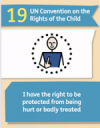
The United Nations Convention on the Rights of the Child (UNCRC) recognises the importance of children’s rights and freedoms and places the best interests of the child first. There are 54 rights referred to as ‘Articles’ that apply to all children aged 0-18 years. Articles 19 and 36 are especially relevant and it is important that everyone understands these rights and ensure they are upheld:
Article 19 – I have the right to be kept safe from violence, abuse or neglect.
Article 36 – I have the right to be kept safe from harm.
Our school core safeguarding principles are:
- All learners have a right to be protected from all forms of abuse and discrimination and to be treated equally regardless of age, gender, racial origin, culture, religious belief, language, disability or sexual identity.
- All learners have a right to be heard and to have their wishes and feelings taken into account.
- All staff understand safe professional practice and adhere to our code of conduct and other associated policies.
- All staff have a responsibility to recognise vulnerability in learners and act on any concern in accordance with this policy.
There are three main elements to this policy:
- Prevention through the culture, teaching and pastoral support offered to learners
- Procedures for identifying and reporting cases, or suspected cases, of abuse. Because of our day-to-day contact with children, school staff are well placed to observe the outward signs of abuse
- Support to those learners who may have been abused.
This policy applies to all staff and volunteers working in Ysgol Golftyn and its governors. Learning support assistants, mid-day supervisors, caretakers, secretaries as well as teachers can be the first point of disclosure for a child. This first point of contact is an important part of the child protection process and it is essential that all staff are aware of and implement the school procedures.
1.2 Key definitions relevant to Safeguarding Children
Safeguarding is defined by Keeping Learners Safe Guidance 2022 as ‘preventing and protecting children from abuse, neglect or other kinds of harm, and educating those around them to recognise the signs and dangers’.
Safeguarding and promoting the well-being of all children attending an education
setting is defined as:
- protecting children from risk of abuse, neglect or other kinds of harm
- preventing impairment of children’s health or development
- ensuring that children grow up in circumstances consistent with the provision of
- safe and effective care
- taking action to enable all children to achieve the best outcomes.
All staff should be aware of the definitions of abuse and neglect in the Social Services and Well-being Act (Wales) 2014 as well as the signs and indicators of abuse and neglect. This is essential in order to communicate concerns about harm in a meaningful way. The definitions below are identified in the Wales Safeguarding Procedures 2019:
‘Abuse’ means physical, sexual, psychological, emotional or financial abuse
‘Neglect’ means a failure to meet a person’s basic physical, emotional, social or psychological needs, which is likely to result in an impairment of the person’s well-being (for example, an impairment of the person’s health or, in the case of a child, an impairment of the child’s development);
‘A child’ The Social Services and Well-being (Wales) Act 2014 and accompanying Guidance define a ‘child’ as a person who is aged under 18.
‘A child at risk’ S.130 (4) of the Social Services and Well-being (Wales) Act 2014 defines a child at risk as a child who:
- Is experiencing or is at risk of abuse, neglect or other kinds of harm
- Has needs for care and support (whether or not the authority is meeting any of those needs).
An ‘adult at risk’ is an adult who:
- is experiencing or is at risk of abuse or neglect
- has needs for care and support (whether or not the authority is meeting any of those needs) and
- as a result of those needs is unable to protect himself or herself against the abuse or neglect or the risk of it.
The use of the term ‘at risk’ means that actual abuse, neglect or other kinds of harm do not necessarily need to occur, rather without interventions by services actual abuse and neglect are likely to occur.
‘Harm’ is defined as:
- ill treatment: this includes sexual abuse, neglect, emotional abuse and psychological abuse
- the impairment of physical or mental health (including that suffered from seeing or hearing another person suffer ill treatment).
- the impairment of physical intellectual, emotional, social or behavioural development (including that suffered from seeing or hearing another person suffer ill treatment).
‘Significant Harm’ There is no statutory definition of significant harm. Therefore, practitioners must:
‘Where the question of whether harm is significant turns on the child’s health or development, the child’s health or development is to be compared with that which could reasonably be expected of a similar child (Section 31(9), Children Act 1989.
Concerns about likely or actual significant harm to a child is the threshold for initiating s47 enquiries under the Children Act 1989.
The following is a non-exhaustive list of examples for each of the categories of harm, abuse and neglect included in vol 5 Working Together to Safeguard People: Volume 5 – Handling Individual Cases to Protect Children at Risk:
Physical abuse – hitting, slapping, over or misuse of medication, undue restraint, or inappropriate sanctions
Emotional/psychological abuse – threats of harm or abandonment, coercive control, humiliation, verbal or racial abuse, isolation or withdrawal from services or supportive networks, witnessing abuse of others
Sexual abuse – forcing or enticing a child or young person to take part in sexual activities, whether or not the child is aware of what is happening, including: physical contact, including penetrative or non-penetrative acts; non-contact activities, such as involving children in looking at, or in the production of, pornographic material or watching sexual activities or encouraging children to behave in sexually inappropriate ways
Financial abuse – this category will be less prevalent for a child, but indicators could be: not meeting their needs for care and support which are provided through direct payments; or complaints that personal property is missing.
Neglect – failure to meet basic physical, emotional or psychological needs which is likely to result in impairment of health or development.
For Signs and Indicators of Possible Abuse, Neglect and Harm in a Child please refer to the Wales Safeguarding Procedures: https://safeguarding.wales/chi/cp/c1p.p2.html
2.1 All schools and colleges have statutory duties to operate in a way that takes into account the need to safeguard and promote the well-being of children, and in the case of some adults, colleges. The legal responsibilities are set out in:
- the common law duty of care
- the duty to report
- the duty arising from the contract of employment.
The arrangements that local authorities, governing bodies and proprietors have in place to comply with these statutory duties need to ensure:
- reasonable measures are taken to minimise risks of harm to children’s well-being
- appropriate actions are taken to address concerns about the well-being of a child or children, working to agreed local policies and procedures in full partnership with other local agencies.
2.2 Legislative Context
Section 175 of the Education Act 2002 requires school governing bodies, local education authorities and further education institutions to make arrangements to safeguard and promote the well-being of all children who are students at a school, or who are students under 18 years of age.
The Children Act 1989 and 2004 places a statutory duty on a range of organisations to make arrangements to ensure that their functions, and services provided on their behalf, are discharged having regard to the need to safeguard and promote the wellbeing of children.
The Governing body at Ysgol Golftyn school will ensure that they are fully aware of the relevant legislation and guidance in relation to safeguarding children in their care and will have due regard for the following:
- Human Rights Act 1998
- Protection of Children Act 1999 (CRB) (2013 DBS)
- Equality Act 2010 & Worker Protection Act 2023
- Rights of Children and Young Persons (Wales) Measure 2011 which encompasses the United Nations Convention on the Rights of the Child 1992.
- Social Services and Well-being (Wales) Act 2014
- Well-being of Future Generations (Wales) Act 2015
- Modern Slavery Act 2015
- Counter Terrorism and Security Act 2015 & Prevent Duty Guidance 2024
- Terrorism (Protection of Premises) Act 2025 (Martyn’s Law)
- Violence Against Women Domestic Abuse and Sexual Violence (Wales) Act 2015 & Domestic Abuse Act 2021
- UK General Data Protection Regulations (GDPR) 2018
- Additional Learning Needs and Education Tribunal (Wales) Act 2018.
- Children (abolition of Defence of Reasonable Punishment) (Wales) Act 2020
At Ysgol Golftyn School we will follow the Wales Safeguarding Procedures 2019 that have been endorsed by the North Wales Safeguarding Children’s Board. Alongside these procedures, the school will follow Keeping Learners Safe Guidance document no: 283/2022 supported by any other guidance and protocols that have been endorsed and agreed by the North Wales Safeguarding Children’s Board in conjunction with this policy.
Failure to have arrangements in place as required by section 175 or to adhere to regulations made under section 157 of the 2002 Act, or to have regard to guidance issued by the Welsh Government, may be grounds for the Welsh Ministers to take action against local authorities, or governing bodies. The responsibility for making sure these arrangements are in place is the duty of the local authority or the governing body. Individuals do not have direct liability.
2.3 Statutory Duty to Report
The Social Services and Well-being (Wales) Act 2014 places a duty to report both children and adults that are at risk of abuse or neglect.
In line with the Wales Safeguarding Procedures 2019, a duty to report to the local authority will be taken to mean a referral to Social Services who, alongside the Police, have statutory powers to investigate suspected abuse or neglect. The use of the term ‘at risk’ means that actual abuse or neglect does not need to have occurred, rather early interventions to protect an adult at risk of abuse should be considered to prevent actual abuse and neglect.
A report must be made whenever there are concerns about a child under the age of 18 years who:
- is experiencing or is at risk of abuse, neglect or other kinds of harm; and
- has needs for care and support (whether or not the authority is meeting any of those needs).
A report should be made whenever there are concerns for an adult at risk who:
- is experiencing or is at risk of abuse or neglect,
- has needs for care and support (whether or not the authority is meeting any of those needs), and
- as a result of those needs is unable to protect himself or herself against the abuse or neglect or the risk of it.
If any member of staff has knowledge, concerns or suspicions that a child or adult at risk is suffering, has suffered or is likely to be at risk of harm, it is their responsibility to ensure that the concerns are referred to the Designated Safeguarding Person. THIS IS NOT A MATTER OF PERSONAL CHOICE.
2.4 Related Policies
In addition to this safeguarding policy, there are other policies that have relevance to safeguarding which our school will monitor to ensure there is consistency and coherence in the way we effectively safeguard our learners. Examples of other relevant school policies as identified in the Keeping Learners Safe Safeguarding Audit Tool include:
| ● Online Safety Policy |
| ● Behaviour Policy |
| ● Physical Intervention Policy |
| ● Anti-bullying including Cyber Bullying |
| ● Attendance and Exclusions Policy |
| ● Additional Learning Needs Policy |
| ● HealthCare Needs Policy |
| ● Intimate Care Policy |
| ● Health and Safety Policy |
| ● Strategic Equality Plan |
| ● Safer Recruitment Policy |
| ● Professional Conduct/Communication Protocols for Staff |
| ● Dealing with Allegations of Professional Abuse |
| ● Whistleblowing Policy |
| ● Educational Visits Policy |
| Other: |
3.1 Early help and prevention from abuse, neglect and harm
Early help, also known as early intervention, plays a vital role in safeguarding children and preventing abuse, neglect, and long-term harm. It aims to:
- Protect children from harm;
- Prevent escalation of concerns;
- Reduce the need for statutory safeguarding interventions;
- Promote long-term wellbeing and resilience.
Children and families identified as vulnerable should be offered early help as soon as concerns emerge. Adverse Childhood Experiences (ACEs), such as abuse, neglect, domestic abuse, mental ill health, and family breakdown, are known to have lasting impacts on a child’s development, health, and future outcomes.
Early identification and intervention are key to meeting the needs of children by preventing or delaying circumstances that might lead to Children’s Services’ intervention. This includes the identification of ACEs and action to prevent or mitigate them, or supporting the child to build resilience.
Addressing low-level well-being problems early can stop issues escalating. Therefore, prevention, identification and early intervention are key, and equipping teachers and other school staff with the necessary knowledge to identify problems, together with support in the form of consultation, liaison and advice from more specialist services is key to the
whole-school approach.
In Flintshire, the Early Help Hub (EHH) supports families who do not meet statutory thresholds for Children’s Services. It is a multi-agency service that includes Social Services, Police, Health, Education, Youth Justice, Family Support Teams, Domestic Abuse Services, Mental Health Services, and the Voluntary Sector.
Referrals to the EHH are made when a child or family would benefit from coordinated early support. The hub works collaboratively to:
- Provide timely, targeted interventions;
- Strengthen family coping skills;
- Address issues such as challenging behaviour, mental health, domestic abuse, and parental conflict.
In response to increasing demand, Flintshire has also established the Information, Advice and Assistance (IAA) Service, which offers quick access to support and skilled conversations with families to understand their needs and connect them to the right help.
All school staff have a responsibility to identify children who may benefit from early help and to follow local referral pathways, including consultation with the Designated Safeguarding Person (DSP), and use of the IAA or Early Help Hub where appropriate.
3.2 Curriculum for Wales
Prevention work is integrated into all aspects of school life and the Curriculum for Wales. This helps to embed a positive ethos where learners have a safe environment in which to learn and have the opportunity and confidence to share concerns with trusted adults. Discussing the issues and listening to the views and opinions of peers can help change attitudes and provide support. When discussing sensitive issues, these need to be presented in a balanced way and ethical issues discussed objectively. However, it is equally important to equip learners to take responsibility for their behaviour.
The aim of Ysgol Golftyn school’s curriculum is to support our learners to become:
- ambitious, capable learners, ready to learn throughout their lives
- enterprising, creative contributors, ready to play a full part in life and work
- ethical, informed citizens of Wales and the world
- healthy, confident individuals, ready to lead fulfilling lives as valued members of society.
At Ysgol Golftyn school we do this by embedding themes of citizenship, democracy, human rights (including the UNCRC), and respect for diversity throughout the curriculum. These elements support learners in understanding the values needed to thrive in modern democratic society and help build resilience against extremist or divisive ideologies.
Religion, values and ethics (RVE) and Relationships and Sexuality Education (RSE) are mandatory elements within the school’s curriculum. A whole-school approach to emotional and mental well-being (WSAEMWB) has been adopted to ensure safeguarding and preventative measures to support children and families are in place.
4.1 The Role of the local authority
The Local authority must ensure that an appropriate senior officer within the education department is designated to have lead responsibility for discharging its safeguarding duties in education. The range of responsibilities attributed to this designated officer post should be consistent with the need to ensure that effective safeguarding arrangements operate across the authority’s education functions. In Flintshire, the Designated Safeguarding Lead for Education is Claire Sinnott.
The local authority has responsibilities at three levels: strategic, support and operational as identified in Keeping Learners Safe 2022. Flintshire County Council will plan, co-ordinate services and allocate resources working in partnership with other agencies in order to meet these requirements.
On a strategic level the local authority should ensure:
| ● They allocate resources to support the work of the North Wales Safeguarding Board (NWSB) |
| ● Their senior officers, including education officers, represent the authority on the North Wales Safeguarding Board and the authority makes an effective contribution to planning coordinated services to meet the needs of children |
| ● They work with other agencies to put in place, and support, effective partnership working |
| ● They build positive working relationships and ensure effective communication with other services within the local authority |
| ● Resources are allocated to enable the local authority and maintained schools to discharge their responsibilities for safeguarding children satisfactorily |
| ● Effective liaison with the appropriate diocesan authorities in respect of arrangements for voluntary-aided or foundation schools in their area |
| ● Maintained schools’ compliance with this guidance is monitored, particularly regarding employment checks (including temporary and agency staff), the existence and operation of appropriate policies and procedures and the training of staff, including the senior person with designated safeguarding responsibility in schools and their supervision |
| ● They bring deficiencies to the attention of the governing body of the school and advise upon the action needed to remedy them |
| ● Inter-agency problems are resolved as soon as possible after they are identified |
| ● They play a full part in child practice reviews in accordance with Social Services and Well-being (Wales) Act 2014: Working Together to Safeguard People: Volume 2 – Child Practice Reviews review and revise procedures and training in light of the findings of reviews and disseminate information about relevant findings to those with responsibility for child protection in the authority and maintained schools. |
On a support level the local authority should:
| ● Ensure that induction training for all new staff working in an education setting in the authority, and for staff who will work with children in maintained schools, includes safeguarding training that will enable them to fulfil their responsibilities effectively in respect of child protection, including responding to disclosures of abuse, neglect and other kinds of harm appropriately and sensitively.
● The local authority should also ensure that suitable refresher training is completed to keep staff knowledge and skills up to date. |
| ● Governors of maintained schools should also receive appropriate training on their safeguarding responsibilities and in handling allegations of abuse against school staff |
| ● Ensure that further training in inter-agency working to safeguard children, either provided by the NWSB or meeting the standards set out by the Board, is available for all staff appointed to have responsibility for safeguarding. Suitable refresher training should also be available and meet the standard set by the NWSB |
| ● Maintain a record of all DSPs and designated governors for safeguarding within schools in their area, as well as the training undertaken and the dates on which training was undertaken |
| ● Oversee the supervision arrangements for DSPs in the authority to ensure the role does not have a detrimental effect on their well-being and they have an opportunity to reflect on their practice |
| ● Provide model policies and procedures for maintained schools on all aspects of child protection, including recruitment, and procedures for dealing with allegations of abuse against staff and volunteers. The policies and procedures must be consistent with Welsh Government guidance (in particular the model policy and statutory guidance issued in Disciplinary and dismissal procedures for school staff: Revised guidance for governing bodies, circular 002/2020 |
| ● Provide advice, guidance and support about dealing with individual cases to maintained schools and DSPs in those establishments. Where necessary, the authority should act on their behalf to resolve any difficulties with, or obtain appropriate support from, NWSB partner agencies |
| ● Liaise with maintained schools, agencies and colleges to ensure referrals are made to the Disclosure and Barring Service (DBS)/Education Workforce Council (EWC) |
| ● Have in place arrangements to support staff within the authority and maintained schools who have designated lead responsibility for safeguarding. These arrangements should encourage and foster a good understanding and working relationship between them, children’s social workers and staff in other agencies involved in safeguarding children, to develop effective partnership working. |
On an operational level, the local authority should:
| ● Promote safe recruitment procedures and support schools to make sure that all appropriate checks are carried out on new staff and unsupervised volunteers who will work with children, including DBS checks |
| ● safeguard and promote the well-being of children who have not been allocated a school place, or are excluded from school, including those being educated in pupil referral units, alternative provision or via the home tutor service |
| ● seek to build effective relationships with home educators that function to safeguard the educational interests and the well-being of children. Doing so will provide parents/carers with access to any support that is available and allow authorities to understand the parents’/carers’ educational provision. |
| ● have in place arrangements for overseeing allegations of abuse against members of staff in the authority, schools or colleges. The Welsh Government has issued guidance, Disciplinary and dismissal procedures for school staff: Revised guidance for governing bodies |
| ● work with schools and SCB partner agencies to ensure that allegations are dealt with quickly, fairly and consistently, and that appropriate referrals are made to the DBS and the EWC |
| ● ensure that the authority’s staff who work with children (including any staff carrying out functions on behalf of the authority) receive training that equips them to carry out their responsibilities for child protection effectively. |
4.2 Responsibilities of the Governing Body
Governing bodies are accountable for ensuring effective policies and procedures are in place to safeguard and promote the well-being of children in accordance with Keeping Learners Safe 2022 and monitoring its compliance with the guidance. Governing bodies of maintained schools must ensure that they:
- have effective safeguarding (including child protection) policies and procedures in place that are:
- in accordance with local authority guidance, locally agreed inter-agency procedures and national minimum standards
- inclusive of services that extend beyond the school/college day (e.g. boarding accommodation, community activities on school premises, etc.);
- reviewed at least annually
- made available to parents or carers on request; and
- provided in a format appropriate to the understanding of children, particularly where schools cater for children with additional learning needs.
- operate safe recruitment procedures that take account of the need to safeguard children, including arrangements to ensure that all appropriate checks are carried out on new staff and unsupervised volunteers who will work with children, including relevant checks
- ensure that the head teacher and all other permanent staff and volunteers who work with children undertake the training necessary to carry out their responsibilities for safeguarding effectively, which is kept up to date by refresher training;
- give clear guidance to temporary staff and volunteers providing cover during short-term absences and who will be working with children
- ensure that the governing body remedies without delay any deficiencies or weaknesses regarding any child protection arrangements brought to its attention; and
- ensure that the DSP, the designated governor and the chair of governors undertake training in inter-agency working that is provided by, or to standards agreed by, the NWSB, as well as refresher training to keep their knowledge and skills up to date, in addition to basic safeguarding training.
- All members of governing bodies should undertake relevant safeguarding and child protection training within the first term of starting the role. This ensures they have the knowledge and information needed to perform their functions and understand their wider safeguarding responsibilities. Members of the governing body fall within Group F of the National Safeguarding Training, Learning and Development Standards and should complete, as a minimum, Group A Safeguarding training available online from Social Care Wales. Governors can also be directed to the Keeping Learners Safe These support all staff in education settings to understand their safeguarding responsibilities as set out in Keeping Learners Safe guidance. There are five separate modules available on Hwb.
Please refer to Appendix 3 and 4 for further information regarding the National Safeguarding Training, Learning and Development Standards groupings.
4.3 Responsibilities of the Designated Governor for Safeguarding
The governing body is responsible for ensuring the school has effective policies and procedures in place for safeguarding children and monitoring the school’s compliance with them. It is recommended that each governing body has a nominated governor for child protection to promote the importance of safeguarding and child protection. The child protection governor will support and assist the governing body to have a better understanding and knowledge of child protection and safeguarding provision within the school.
Schools should identify a designated governor for safeguarding, for example to:
- Confirm that the school has a Safeguarding Policy, which is consistent with the Wales Safeguarding Procedures 2019, that it is reviewed annually and is readily accessible to all members of staff
- Be familiar with the schools Safeguarding Policy, the Wales Safeguarding Procedures 2019 and keeping informed of child protection and safeguarding initiatives, nationally and locally from the Welsh Government, Regional Consortium and local authority
- Ensure the governing body undertakes an annual review of safeguarding policies and procedures
- Ensure an evaluation of the school’s safeguarding arrangements is conducted (with use of Keeping Learners Safe Audit Tool / completion of the Annual Safeguarding Children Report to the LA) and there are planned actions and timescales to address any identified shortcomings
- Ensure that the school has an up-to-date and agreed staff disciplinary procedure for dealing with allegations of misconduct against staff, including child protection allegations, that complies with the relevant legislation including the appointment of an independent investigator, and has regard to Welsh Government guidance and locally agreed inter-agency procedures
- Be familiar with Estyn’s guidance for safeguarding
- Meet as and when required, by appointment, with the designated member of staff for child protection to monitor the effectiveness of the Safeguarding Policy in the school (in accordance with the Governor Visits to Schools policy)
- Work with the Additional Learning Needs link governor (if appropriate)
- Help to ensure that the school works well with relevant agencies and individuals;
- Help to ensure that accurate records are being kept by the school and that the child protection file is up to date
- Be aware of the number of learners at the school currently on the child protection register
- Check that staff and governors are appropriately trained and that all members of staff and governors know what to do if they have any child protection concerns
- Ensure safe recruitment procedures are in place and appropriate checks are being carried out on new members of staff and volunteers
- Ensure aspects of safeguarding are incorporated within curriculum delivery
- Keep Safeguarding knowledge up to date by attending governor relevant training.
4.4 Responsibilities of the Headteacher
Headteachers of all schools should foster a nurturing culture within the school and promote open communication between staff and learners on safeguarding matters. The Headteacher must ensure that all staff (including supply teachers and volunteers):
- fully implement and follow the safeguarding policies and procedures adopted by the governing body
- have both time and access to sufficient resources to enable them to discharge their responsibilities, including taking part in strategy discussions and other inter-agency meetings, and contributing to the assessment of children
- In line with the National Safeguarding Training, Learning and Development Standards the Headteacher must complete Group C training as a minimum requirement.
- understand the procedures for safeguarding children and feel able to raise concerns about poor or unsafe practice and confident that such concerns will be addressed sensitively and effectively in a timely manner in accordance with agreed Welsh Government Procedures for Whistleblowing in Schools and Model Policy; as part of their induction, are given a written statement about the school policy and procedures and the name and contact details of the DSP; and
- The Headteacher must appoint the appropriate number of DSPs and deputy DSPs for their education setting.
- The Headteacher should ensure that the DSP:
- is given sufficient time and resources to carry out the role effectively, which should be explicitly defined in the post holder’s job description
- has access to the required training and support to undertake the role, including online safety training
- has time to attend and provide reports and advice to case conferences and other inter-agency meetings as require
- has the appropriate IT equipment to carry out the role effectively.
- is given appropriate support in their role to ensure their wellbeing needs are met.
4.5 Responsibilities of the Designated Safeguarding Person (DSP)
Each school must identify a DSP with lead responsibility for managing all safeguarding concerns. The DSP must be available to discuss safeguarding concerns; should be consulted, when possible, as to whether to raise a safeguarding concern with the local authority; and will manage any immediate actions required to ensure the individual at risk is safe from abuse. All practitioners should know who to contact in their education setting for advice and they should not hesitate to discuss their concerns no matter how insignificant they may appear.
The DSP need not be a teacher but must be a senior member of the school leadership team with the status and authority within the organisation to carry out the duties of the post, including committing resources to safeguarding matters and directing other staff. The DSP could also be a single appointment within the senior team and need not carry other duties.
Each DSP must have at least one deputy who has equal status and access to the same training. The number of deputies will depend on the education setting and should reflect the proportion of work involved and the size and scale of the education setting. Larger education settings should have a team of staff working together and split-site education settings should have a DSP available on each site.
The DSP should possess the necessary skills and qualities for the role, which will have a strong focus on communication with learners and professionals. This can be a demanding role and will require a level of expertise, knowledge, resources and support. In line with the National Safeguarding Training, Learning and Development Standards the DSP must complete Group C training as a minimum requirement.
Handling individual cases may be a responsibility delegated to other members of staff, but it is important that a senior member of staff take overall responsibility for this area of work. The DSP should always be kept informed of the progress and the outcome of all cases. All staff taking on these responsibilities should be fully trained and skilled in their responsibilities.
In education settings with a high number of safeguarding concerns, consideration should be given to appointing a full-time DSP with relevant skills and experience. An alternative arrangement might involve the delegation of day-to-day responsibilities while the DSP retains overall responsibility, as described above.
The DSP should have adequate support and supervision to undertake their role effectively. The supervision should support the DSP with the emotional impact of their role and provide an opportunity for reflection on their practice. This could be done on an individual or group basis but the DSP should be provided with an opportunity for individual support where necessary.
The DSP must know how to recognise and identify the signs of abuse, neglect and other types of harm, irrespective of whether it is online or offline, and know when it is appropriate to make a report to the local authority (or Police where the child/children are in immediate danger).
The DSP role involves providing advice and support to other staff, record-keeping, working with family members or carers, making referrals to children’s services and attending statutory meetings, as well as liaising with the North Wales Safeguarding Board (NWSB) and working with other agencies as necessary. The DSP role is not to investigate allegations, but they must keep the Headteacher informed of all safeguarding concerns raised in the school.
The DSP should also consider how safeguarding more widely can be addressed and ensure preventative measures are adopted in the education setting. This part of the role will include building relationships with other agencies, as well as ensuring staff and learners are informed about risks and how to access support. The DSP should provide support to staff members to carry out their safeguarding duties and liaise closely with other services such as children’s
social care and family support services.
The DSP will take responsibility for the education setting’s safeguarding and child protection practice, policy, procedures and professional development, working with other agencies as necessary. The DSP should ensure the school’s safeguarding policy is updated and reviewed annually, and work with the governing body or proprietor regarding this. The DSP must keep a record of all staff training, including the dates, details of the provider and record of staff attendance.
The DSP is responsible for ensuring that parents / carers see copies of the safeguarding policy. This may help avoid the potential for later conflict by alerting them to the role of the school and the fact that reports may be made to the local authority where there are safeguarding concerns. Many educational settings include information about this at induction meetings for new parents / carers, in their prospectus and on their website.
The DSP should ensure that the school completes the Keeping Learners Safe Safeguarding Audit Tool, to support a whole setting approach to safeguarding and provide a benchmark against which to seek to continually improve safeguarding approaches and structures. The Audit Tool should be regularly reviewed to ensure that there is constant reflection, learning and updating of processes within the school.
The Audit Tool can be downloaded from the link below:
https://gov.wales/sites/default/files/publications/2020-11/annex-3-safeguarding-audit-tool.docx
Note: All Flintshire schools are required to submit the Keeping Learners Safe Safeguarding Audit Tool to the LA for monitoring purposes on a bi-annual basis.
It is effective practice for the DSP to provide an annual briefing and regular updates at staff meetings on any safeguarding and/or child protection issues or changes in local procedures. This ensures that all staff are kept up to date and are regularly reminded of their responsibilities as well as the school’s policies and procedures. Many schools find it helpful to discuss safeguarding regularly at staff meetings so that awareness remains high.
The DSP should liaise with the designated governor for safeguarding so that the designated governor can report on safeguarding issues, irrespective of whether the issue is online or offline, to the governing body. Reports to the governing body should not be about specific child protection cases but should review the safeguarding policies and procedures. It is good practice for the nominated governor and the DSP to present the report together.
4.6 Responsibilities of All Staff
All staff and volunteers working at Ysgol Golftyn school must be aware of the following responsibilities:
- All staff members should be aware of the signs of abuse, neglect and other kinds of harm.
- All staff have a responsibility to provide a safe environment and to identify children who are suffering, or are at risk of suffering, abuse, neglect or harm irrespective of where this happens (online or offline, on or off school premises).
- All staff are reminded that they cannot promise confidentiality following disclosure.
- Where staff members have concerns that a child is at risk of abuse, neglect or other harm they should raise these with the DSP. There is a legal duty to record and report the concerns on the day the allegation/concern has been raised. This will usually be done through the DSP, but the safety of the child must be the priority so there may be occasions when staff will need to contact Children’s Services directly if there is an immediate concern.
- All staff must be aware of the role of the DSP, and of how to raise concerns with the DSP.
- All staff should be aware of the Wales Safeguarding Procedures and know how to access the procedures.
- All staff members must undertake appropriate and regularly updated safeguarding training.
- In line with the National Safeguarding Training, Learning and Development Standards, all staff must complete Group A training and depending on their role, complete the Group B training accordingly.
- All staff are also required to complete the Prevent and VAWDASV e-learning modules.
- All staff must be clear about professional boundaries and act appropriately and consistently with the schools Code of Conduct and that of the EWC.
- In the event of a concern or allegation about a member of staff, volunteer or other professional, staff should raise this with the Headteacher as soon as possible.
- All staff should be aware of who the Chair of Governors is and how to contact them in the event of an allegation or concern arising about the Headteacher.
- All staff should be aware of who the Designated Safeguarding Lead for Education is and how to contact them if required.
The Wales Safeguarding Procedures provide common standards to guide safeguarding and child protection practice and a framework within which individual reports of a child or adult at risk, actions, decisions and plans are made and carried out. They are an integral part of the framework for safeguarding and promoting the well-being of children and adults.
5.1 At Ysgol Golftyn we follow the Wales Safeguarding Procedures 2019 that have been endorsed by the North Wales Safeguarding Board, alongside any other policies and procedures that have been endorsed and agreed by the board and that of Flintshire County Council.
- To access the Wales Safeguarding Procedures, follow the link below: https://safeguarding.wales/en/
- To access the North Wales Safeguarding Board policies and procedures, follow the link: https://www.northwalessafeguardingboard.wales/policies-and-procedures/
- 2 Specific action to take should an education setting have concerns
about a child
Where staff members have concerns that a child is at risk of abuse, neglect or other harm they must raise these with the DSP. They should also record these concerns and the information obtained.
Staff members must also be aware of wider safeguarding concerns and report these to the DSP. These include circumstances as outlined in sections 7-11 of this policy.
The DSP must then decide whether it is appropriate to make a report to Children’s Services and/or the Police, within 24 hours. The DSP can contact Children’s Services directly for advice as required.
It is important to note, any staff member can also report concerns to Children’s Services or to the Police directly; however, liaison with the DSP is advisable in all cases where possible.
Where available, the report should be made using the North Wales Referral Form. The report must include basic/core information, the cause for concern and any relevant information held by the agency.
The North Wales referral form is accessible on the following link: https://www.northwalessafeguardingboard.wales/north-wales-referral-form-children-and-families/ which must be emailed to:ChildProtectionReferral@flintshire.gov.uk
If there are immediate concerns about a child’s safety or a criminal offence against a child is suspected, the emergency services must be contacted without delay to protect the child/children from risk of serious harm.
The DSP role is not to investigate allegations, however there may be times when a member of staff will be asked by Children’s Services / Police to clarify the accounts given by a child. This is in order to give relevant context to important detail; this will assist the decision maker in respect of threshold being met and likewise, significant harm being established as a real concern.
Accurate, concise and clear record-keeping in straightforward language is an essential part of an individual employee and professional’s accountability and underpins good child protection practice.
5.3 Engaging in the child protection process
Any member of staff making a report may be asked to complete some, or all, of the following tasks. The school should ensure that staff have sufficient time and other necessary resources to discharge these tasks effectively and staff should be prepared and willing to:
- assist in the child protection enquiries under section 47 of the Children’s Act1989
- attend the child protection conference
- provide a written report for the child protection conference
- contribute to the initial and core assessments
- attend core group meetings.
Where a child is the subject of a care and support protection plan, the DSP should be involved in the preparation of the plan. The education setting’s role and responsibilities in contributing to actions to safeguard the child, and promoting their well-being, should be clearly identified.
Schools involvement may also be required as part of a Single Unified Safeguarding Review (SUSR) working closely with Education and Children’s Services in such circumstances. Refer to 16.1 for further detail
5.4 An overview of the duty to report process (Wales Safeguarding Procedures)
.
6.1 Effective safeguarding depends on timely and appropriate information sharing between professionals and agencies. All staff working at Ysgol Golftyn school should be aware of their responsibilities under the UK’s data protection legislation. Every maintained school and college in the UK is required to appoint a data protection officer (DPO).
Schools must share information in accordance with the General Data Protection Regulation (GDPR) and the Data Protection Act 2018, referred to as the UK’s data protection legislation. One of the specific circumstances which provides for information sharing is in order to prevent abuse or serious harm to others. The law supports proportionate and necessary information sharing in the interests of safeguarding. Ysgol Golftyn school is committed to creating a culture where staff are confident to raise concerns and share information appropriately. Staff are trained to understand that safeguarding concerns must not be kept to themselves, and that sharing information lawfully and securely is essential to keeping children safe.
Both Child Practice Reviews (CPR) in Wales and Child Safeguarding Practice Reviews in England consistently highlight that failures to communicate or share relevant information have been key factors in serious cases where children have experienced significant harm or, in the most tragic circumstances, have died as a result of abuse or neglect. These reviews show that when information is not shared (due to uncertainty, over-caution, or poor inter-agency working) opportunities to protect children can be missed.
The Wales Accord on the Sharing of Personal Information (WASPI) outlines organisational responsibilities in relation to the sharing of sensitive information. www.waspi.org/
All staff at Ysgol Golftyn will seek advice from the DSP and/or the Headteacher with regard to the sharing of any information. DSP’s should use their judgement when making decisions about what information to share, and should follow organisation procedures. The most important consideration is whether sharing information is likely to support the safeguarding and protection of a child.
6.2 Principles
There are a number of principles that can assist all staff in conjunction with the DSP in making decisions about sharing information:
Necessary and proportionate – When taking decisions about what information to share, you should consider how much information you need to release. Not sharing more data than is necessary to be of use is a key element of the GDPR and Data Protection Act 2018, and you should consider the impact of disclosing information on the information subject and any third parties. Information must be proportionate to the need and level of risk.
Relevant – Only information that is relevant to the purposes should be shared with those who need it. This allows others to do their job effectively and make informed decisions.
Adequate – Information should be adequate for its purpose. Information should be of the right quality to ensure that it can be understood and relied upon.
Accurate – Information should be accurate and up to date and should clearly distinguish between fact and opinion. If the information is historical then this should be explained.
Timely – Information should be shared in a timely fashion to reduce the risk of missed opportunities to offer support and protection to a child. Timeliness is key in emergency situations and it may not be appropriate to seek consent for information sharing if it could cause delays and therefore place a child or young person at increased risk of harm. Practitioners should ensure that sufficient information is shared, as well as consider the urgency with which to share it.
Secure – Wherever possible, information should be shared in an appropriate, secure way. Practitioners must always follow their organisation’s policy on security for handling personal information.
Record – Information sharing decisions should be recorded, whether or not the decision is taken to share. If the decision is to share, reasons should be cited including what information has been shared and with whom, in line with organisational procedures. If the decision is not to share, it is good practice to record the reasons for this decision and discuss them with the requester. In line with each organisation’s own retention policy, the information should not be kept any longer than is necessary. In some rare circumstances, this may be indefinitely, but if this is the case, there should be a review process scheduled at regular intervals to ensure data is not retained where it is unnecessary to do so.
For further guidance please refer to: Working Together to Safeguard People: Non-statutory guide on information sharing to safeguard children 38137 Working together to safeguard people: Non-statutory guide on information sharing to safeguard children (gov.wales)
- Duty of Confidentiality
The duty of confidentiality is not absolute and may be breached where this is in the best interests of the child and in the wider public interest. If professionals judge that disclosure is necessary to protect the child or other children from a risk of serious harm, confidentiality may be breached.
All staff must understand that they cannot promise a child to keep secrets which might compromise the child’s safety or well-being. Staff have a professional responsibility to share relevant information about the protection of learners with the designated statutory agencies when a child is experiencing child wellbeing concerns.
It is important that each member of staff deals with this sensitively and explains to the child that they must inform the appropriate people who can help the child, but they will only tell those who need to know in order to be able to help.
Staff should reassure the child and tell them that their situation will not be common knowledge within the school. Staff should be aware that it may well have taken significant courage on the part of the child to disclose the information and they may also be experiencing conflicting emotions, involving feelings of guilt, embarrassment, disloyalty (if the abuser is someone close) and hurt.
It is important that each member of staff deals with this sensitively and explains to the child that they must inform the appropriate people who can help the child, but they will only tell those who need to know in order to be able to help. Staff need to be mindful that it may have taken significant courage on the part of the child to disclose the information and they may also be experiencing conflicting emotions, involving feelings of guilt, embarrassment, disloyalty (if the abuser is someone close) and hurt.
The Headteacher / DSP will only disclose any information about a learner to other members of staff on a need-to-know basis.
6.4 Recording and Sharing Safeguarding Information
Suspicion about a child being at risk may take the form of concerns rather than known facts. Concerns about a child at risk can arise in many different contexts, including when a child is already known to Children’s Services. It is important that these concerns are logged and recorded.
As detailed in Keeping Learners Safe 2022 ‘All Education Settings must have a suitable system in place to support effective data collection of children suspected to be at risk’. There are a number of software packages to support schools to collect data internally about safeguarding concerns relating to children. These packages can support staff to log concerns and the DSP to identify patterns of abuse, neglect, or other kinds of harm.
In schools, it is the responsibility of the DSP to keep detailed, accurate and secure records of children where there are safeguarding concerns. These records are confidential and should be kept separately from other learner records. They should include a chronology of concerns, reports, meetings, phone calls and emails.
Ysgol Golftyn uses CPOMS (Child Protection Online Management System) as its central platform for recording all safeguarding, child protection, and welfare concerns.
Where appropriate, and in line with statutory guidance and data protection legislation, the school also uses CPOMS Engage to securely share safeguarding and child protection information with the local authority. CPOMS Engage enables:
- Timely and secure transfer of safeguarding records to the local authority
- Full audit trails of information shared and received
- Consent management and configuration in accordance with the school’s data protection responsibilities.
Information is shared only when there is a lawful basis to do so, including where there is a safeguarding risk to a child or when sharing is required to fulfil the school’s statutory safeguarding duties. This includes obligations under the Children Act 1989 and 2004, Keeping Learners Safe, Working Together to Safeguard Children, the UK General Data Protection Regulation (UK GDPR), and the Data Protection Act 2018. Information sharing is governed by a formal CPOMS Share Contract between the school and the local authority, outlining the scope, purpose, and lawful basis for all data exchanges.
The data protection legislation allows for the sharing of information and should not be automatically used as a reason for not doing so. One of the exceptional circumstances that
provides for information-sharing is to prevent abuse, neglect or harm.
6.5 Transfer of Child Protection Records
In line with Keeping Learners Safe, when a learner moves to a new school, the DSP must ensure that any child protection records are copied and transferred securely to the DSP at the receiving school as soon as possible. These records must be transferred separately from the main pupil file to maintain confidentiality and handled in accordance with the UK General Data Protection Regulation (UK GDPR), the Data Protection Act 2018, and the school’s Data Protection Policy. The receiving school should be asked to confirm safe receipt of the records. The Education Welfare Service must also be notified, especially where there are attendance or welfare concerns. This process ensures that the new school is alerted to any safeguarding risks or needs, so appropriate support and oversight can be provided from the outset. Clear and timely communication between the DSPs at both schools is essential to ensure that the learner remains safe and supported during the transition phase.
The safety of individual children / adults is the paramount consideration in any professional disagreement and any unresolved issues should be addressed with due consideration to the risks that might exist for the child / adult.
All staff at Ysgol Golftyn school should feel able to challenge decision making and to see this as their right and responsibility in order to promote the best multi-agency safeguarding practice. The North Wales Protocol for the Resolution of Professional Disputes developed by the North Wales Safeguarding Board provides workers with the means to raise concerns they might have about decisions made by other professionals or agencies.
In the first instance, professionals should attempt to resolve their differences through discussion within a timescale that protects the child/ adult at risk from harm.
At all stages of the process actions and decisions must be recorded in writing and shared with relevant personnel. This must include written confirmation between the parties about an agreed outcome of the disagreement and how any outstanding issues will be pursue
For the protocol in full please click on the link below:
8.1. At Ysgol Golftyn we recognise that children who are at risk, suffer abuse or witness violence may be deeply affected by this. This school may be the only stable, secure and predictable element in the lives of children at risk. Nevertheless, when at school their behaviour may be challenging and defiant or they may be withdrawn.
Ysgol Golftyn will endeavour to support learners through:
- The content of the curriculum to encourage self-esteem and resilience
- The school ethos which: promotes a positive, supportive and secure environment; and gives learners a sense of being valued
- The school’s behaviour policy, which is aimed at supporting vulnerable learners in the school.
- The school will endeavour to ensure that the learner knows that some behaviour is unacceptable but that they are valued and not to be blamed for any abuse which has occurred
- Liaison with other agencies who support the learner such as local authority officers including Educational Psychology Service, Nurture Support or the Education Welfare Service – Child and Adolescent Mental Health Services (CAMHS) and advocacy services;
- Keeping records and notifying the local authority as soon as there is a recurrence of a concern.
- When a learner on the child protection register leaves, we will transfer information to the new provider immediately and inform Children’s Services.
8.2 Anti-Bullying
At Ysgol Golftyn we are committed to providing a secure and caring environment for all. Bullying, in any form, will not be tolerated.
Staff should report their concerns to their DSP. Even where safeguarding is not considered to be an issue, the school may need to draw on a range of external services to support the learner who is experiencing bullying, or to tackle any underlying issue, which has contributed to a child engaging in bullying.
All incidents of bullying must be accurately recorded and monitored as part of the school’s safeguarding procedures. This includes bullying related to racism or any of the protected characteristics under the Equality Act 2010. Ysgol Golftyn school uses CPOMS to log and monitor all incidents of bullying. The local authority has a key role in overseeing patterns and trends in bullying, including those of a discriminatory nature. CPOMS Engage is used by the local authority to access relevant data and to inform appropriate action and reporting at a local level.
The Welsh Government Rights, respect, equality: Statutory guidance for governing bodies of maintained schools (2019) is reflected in our Anti bullying policy which can be found on the school website.
8.3 Physical Contact with Learners (physical intervention / restraint)
Section 93 of the Education and Inspections Act 2006 enables school staff to use such force as is reasonable in the circumstances to prevent a child or young person from doing, or continuing to do, any of the following:
- committing any offence (or, for a learner under the age of criminal responsibility, what would be an offence for an older learner)
- causing personal injury to, or damage to the property of, any person (including self-harm to the learner)
- prejudicing the maintenance of good order and discipline at the school or among any learners receiving education at the school, whether during a teaching session or otherwise.
There is no legal definition of when it is reasonable to use force; it depends on the specific circumstances of each case. For the use of force to be lawful, it must be:
- in proportion to the consequences it is intended to prevent
- the minimum necessary to achieve the desired outcome
Use of force cannot be justified for preventing trivial misbehaviour.
Physical intervention or restraint is normally carried out only by staff who have received accredited training in safe handling and de-escalation. However, in exceptional and unforeseen circumstances, they may be used by any member of staff identified under Section 95 of the Act, where necessary to prevent harm or maintain safety. These include:
- any teacher who works at the school, and any other person whom the Headteacher has authorised to have control or charge of learners.
- This includes: support staff whose job normally includes supervising learners, such as teaching assistants, learning support assistants, learning mentors, and lunchtime supervisors
- can also include individuals temporarily authorised by the Headteacher to supervise learners, such as paid members of staff whose role does not normally involve learners supervision (e.g. catering or premises staff) and unpaid volunteers (e.g. parents on school trips)
- does not include prefects.
Those exercising the power to use force must take proper account of any particular Additional Learning Need (ALN) and/or disability that a learner may have.
The school expects every effort to be made to de-escalate a situation before any physical intervention / restraint is considered. The behaviour management strategy used by the school includes staff training in appropriate de-escalation and safe handling techniques.
At Ysgol Golftyn Team Teach or an equivalent accredited programme is the approach used.
All incidents of physical intervention must be accurately recorded and monitored as part of the school’s safeguarding procedures.
Ysgol Golftyn uses CPOMS to log and monitor all incidents of physical intervention.
The local authority has a key role in monitoring the use of physical intervention in schools and CPOMS Engage is used to access relevant data and to inform appropriate action and reporting at a local level.
All incidents must involve appropriate follow-up support for both the learner and staff involved, including the opportunity for reflection and debriefing
Please refer to the school’s Positive handling and physical Intervention Policy for further information which is consistent with the Welsh Government’s Reducing Restrictive Practices Framework 2021. This can be found on the school website.
- Children with Additional Learning Needs (ALN)
Children with Additional Learning Needs (ALN), including those with disabilities or sensory impairments, may be at increased risk of abuse, neglect, and harm. The Welsh Government recognises that children with ALN often face additional communication, cognitive or social barriers that can make it more difficult for them to disclose concerns or seek support (Keeping Learners Safe, 2023).
Staff must be aware of these vulnerabilities and understand that children with ALN may be less likely to receive the protection and support they need following incidents of abuse. Learners with profound and multiple learning difficulties, sensory impairments, or social, emotional and behavioural needs may also present safeguarding concerns in different ways, requiring staff to be particularly vigilant and responsive.
All staff at Ysgol Golftyn have a duty to ensure that appropriate, person-centred safeguarding measures are in place for learners with ALN, in line with the principles set out in the ALN Code for Wales (2021). Close collaboration between safeguarding leads, ALN Coordinators (ALNCos), parents/carers and external agencies is essential to ensure each learner’s safety and well-being is prioritised.
At our school, the ALN Coordinator is Claire Williams who works closely with the DSP to ensure that learners with ALN receive the appropriate support and protection.
Further information can be found in the school’s ALN Policy, available on the school website or upon request from the school office.
9.1 Modern Slavery
Modern slavery encompasses human trafficking and slavery, servitude and forced or compulsory labour. In human trafficking cases, exploitation can take many forms, including: sexual exploitation, forced labour, slavery, servitude, forced criminality and removal of organs.
Local Authorities are First Responder Organisations and, under section 52 of the Modern Slavery Act 2015, have a statutory Duty to Notify the Home Office when they suspect a person may be a victim of modern slavery or human trafficking. This is discharged by referring a victim into the National Referral Mechanism (NRM) or by completing a notification to the Home Office when a potential adult victim does not consent to a referral.
Modern slavery is a form of child abuse and normal safeguarding/child protection procedures should always be followed in regard to any potential victim. Any concerns that a child or an adult at risk, may be experiencing any level of exploitation should be reported to the DSP immediately and action taken in accordance with the Wales Safeguarding Procedures. If you believe a child or adult is in immediate risk of harm, you should contact the Police.
Please refer to ALL WALES PRACTICE GUIDE: ‘Safeguarding children who may be trafficked’ for indicators of trafficking and exploitation: https://www.safeguarding.wales/chi/c6/c6.p3.html
The Statutory guidance: Modern Slavery: statutory guidance for England and Wales (under s49 of the Modern Slavery Act 2015) and non-statutory guidance for Scotland and Northern Ireland (accessible version) was updated August 2025 and can also provide helpful information:
9.2 Child Sexual Exploitation (CSE)
CSE is a form of child sexual abuse which involves an element of exchange. Any child can be sexually exploited irrespective of gender, ethnicity or sexuality. CSE can be perpetrated in many different ways ranging from the seemingly consensual relationship where sex is exchanged for affection or gifts, to serious organised crime by gangs and groups. What marks out exploitation is an imbalance of power in the relationship. The perpetrator always holds some kind of power over the victim which increases as the exploitative relationship develops.
Sexual exploitation involves varying degrees of coercion, intimidation or enticement, including unwanted pressure from peers to have sex, sexual bullying and may be part of a complex picture of interrelated safeguarding issues. However, it is also important to recognise that some young people who are being sexually exploited do not exhibit any external signs of this abuse.
Any concerns that a child may be experiencing any level of exploitation should be reported to the DSP immediately and take action in accordance with the Wales Safeguarding Procedures. If you believe a child is in immediate risk of harm, you should contact the Police.
Please refer to ALL WALES PRACTICE GUIDE: ‘Safeguarding children from child sexual exploitation (CSE)’ for further information: https://safeguarding.wales/chi/c6/c6.p10.html
9.3 Child Criminal Exploitation (CCE)
‘Child Criminal Exploitation occurs where an individual or group takes advantage of an imbalance of power to coerce, control, manipulate or deceive a child or young person under the age of 18. The victim may have been criminally exploited even if the activity appears consensual. Child Criminal Exploitation does not always involve physical contact; it can also occur through the use of technology.’ CCE includes a number of types of exploitation, including forced labour, forced theft, benefit fraud, acquisitive crime, drug cultivation and production, and county lines cases.
If a member of staff has concerns that a child may be a victim of Child Criminal Exploitation they should be referred to the DSP. If you believe a child is in immediate risk of harm, you should contact the Police.
Please refer to ALL WALES PRACTICE GUIDE: ‘Safeguarding children from Child Criminal Exploitation’ (CCE) for further information: https://www.safeguarding.wales/chi/c6/c6.p1.html
9.4 Peer-on-peer sexual abuse and Harmful Sexual Behaviour
Sexual abuse can occur between children of any age and sex, and takes many forms along a continuum ranging from sexual harassment through to contact sexual abuse (including peer sexual exploitation and harmful sexual behaviour). Peer-on-peer abuse can involve children of similar age or year group, while other harmful sexual behaviour may involve greater age differences. Children’s sexual behaviour exists on a wide continuum, from behaviour that is normal and developmentally appropriate, through to behaviour that is inappropriate, problematic, abusive or violent and it is essential for staff to understand this continuum to ensure that responses are appropriate.
The Welsh Government-agreed definition of peer-on-peer sexual harassment in educational settings is: ‘Any unwanted behaviour of a sexual nature by a learner towards another learner that can occur online and offline. Sexual harassment is likely to violate a learner’s dignity, and/or make them feel intimidated, degraded or humiliated and/or create a hostile, offensive or sexualised environment’.
Staff may encounter reports (from inside or outside of school) of behaviours including:
- sexual comments, such as telling sexual stories, making lewd comments, making sexual remarks about clothes and appearance, and calling someone sexualised names
- sexual ‘jokes’ or taunting
- physical behaviour, such as deliberately brushing against someone, interfering with someone’s clothes (schools and colleges should be considering when any of this crosses a line into sexual violence, it is important to talk to and consider the experience of the victim)
- displaying pictures, photos or drawings of a sexual nature
- upskirting (which is a criminal offence)
- online sexual harassment.
Online sexual harassment may be standalone, or part of a wider pattern of sexual harassment or sexual violence. It may include:
- consensual and non-consensual sharing of nude and semi-nude images or videos
- sharing of unwanted explicit content
- sexualised online bullying or unwanted sexual comments and messages, including on social media
- sexual exploitation, coercion and threats
- coercing others into sharing images of themselves or performing acts they are not comfortable with online.
Harmful Sexual Behaviour (HSB) is defined in Welsh Government as: ‘sexual behaviour expressed by children and young people under the age of 18 years that is developmentally inappropriate, may cause harm to themselves or others, or which is abusive towards another child, young person or adult.’ This definition includes both non‑contact and contact behaviours (for example, grooming, exhibitionism, voyeurism, sharing sexual images, or inappropriate sexualised language or behaviour)’.
The 2024 Peer‑on‑Peer Sexual Harassment Action Plan published by Welsh Government, strengthens expectations around prevention, professional learning, healthy relationship education (via the RSE Code), and online safety.
Ysgol Golftyn are committed to safeguarding all learners and to creating a safe, respectful environment that does not tolerate any form of sexual harassment or harmful sexual behaviour (HSB). In line with Welsh Government guidance and the Wales Safeguarding Procedures, the Safeguarding Policy includes clear expectations and actions to address such behaviours. The approach at Ysgol Golftyn includes:
- Providing clear definitions of sexual harassment and harmful sexual behaviour, including examples of both contact and non-contact behaviours, as well as behaviours that may take place online or through digital platforms.
- Offering safe and accessible mechanisms for learners to report concerns, including options for anonymous reporting where appropriate, so that learners feel confident and supported in disclosing incidents.
- Ensuring appropriate support for victims, which may include access to pastoral care, counselling services, safeguarding plans, or reasonable adjustments to help the learner feel safe and supported within the school environment.
- Implementing proportionate and supportive interventions for learners who exhibit harmful sexual behaviour, balancing the need for safeguarding with a recognition of their developmental needs and the importance of education, reflection, and rehabilitation.
- Regularly reviewing safeguarding policies, procedures, and incident data to monitor patterns or trends, assess the effectiveness of our responses, and identify areas for improvement.
- Providing staff with professional learning on recognising, preventing, and responding to peer-on-peer sexual harassment and harmful sexual behaviour e.g. Brook Traffic Light Tool / NSPCC HSB training.
Any concerns that a learner, child or adult at risk may be experiencing or engaging in Harmful Sexual Behaviour should be reported without delay to the Designated Safeguarding Person, and action taken in accordance with the Wales Safeguarding Procedures. If a child is in immediate risk of harm, the Police must be contacted.
Please refer to ALL WALES PRACTICE GUIDE: ‘Safeguarding children where there are concerns about harmful sexual behaviour’ for further information: https://www.safeguarding.wales/en/chi-i/chi-i-c6/c6-p7/
The ‘Guidance for education settings on peer sexual abuse, exploitation and harmful sexual behaviour’ provides practical tools to prevent and respond to instances of peer sexual abuse, exploitation and harmful sexual behaviour taking place both inside and out of school’ can also provide helpful information accessible on the link below:
10.1 Violence Against Women, Domestic Abuse and Sexual Violence (VAWDASV)
Everyone working with children at Ysgol Golftyn should be alert to the frequent interrelationship between domestic abuse and the abuse and neglect of children. Where there is evidence of domestic abuse, the implications for any children in the household should be considered, including the possibility that the children may themselves be subject to violence or other harm.
The Welsh Government’s National Training Framework on Violence Against Women, domestic abuse and sexual violence issued in 2019 sets out the level of training appropriate for education-based staff. All staff at Ysgol Golftyn are required to undertake Group 1 VAWDASV training which is available as an e-learning module for all Flintshire County Council employees. This should be renewed within 3 years. All new staff must complete this course within the first term of their employment.
Ask and Act Group 2 training is required for DSPs and as a minimum, one DSP should attend the Ask and Act course from each school (renewed within 3 years).
Where staff at Ysgol Golftyn school have cause to believe that a child is at risk from, is the subject of, or is living in a household with, violence or abuse, or an adult is at risk, the DSP should be informed immediately and take action in accordance with the Wales Safeguarding Procedures.
Please refer to ALL WALES PRACTICE GUIDE: ‘Safeguarding children affected by domestic abuse’ for further information: https://safeguarding.wales/chi/c6/c6.p4.html
The Live Fear Free helpline is a free 24-hour confidential helpline that offers support and advice to all victims of abuse and violence, regardless of gender and sexual orientation, and to ‘concerned others’ such as practitioners, family members, friends, colleagues and members of the public. Practitioners can receive advice and guidance from the Live Fear Free Helpline (0808 8010 800)
10.2 Operation Encompass
In conjunction with North Wales Police, Ysgol Golftyn is participating in Operation Encompass to support children and young people who have been involved in or witness to a domestic abuse incident. This is a Police and education early intervention safeguarding partnership which supports children and young people who experience Domestic Abuse. For further information, please visit: https://www.operationencompass.org/
At Ysgol Golftyn Nicola Cooper is the identified in school link for Operation Encompass and is notified directly where the Police have been called to a domestic incident and a child was present. The information the school receives enables staff to prepare for the child at school and ensure they have the support they need. The Operation Encompass information is stored in line with all other confidential safeguarding and child protection information.
For further support, please contact the Senior Learning Advisor – Engagement or the Senior Education Social Worker.
10.3 Forced Marriage
Forced marriage is an unacceptable cultural practice which is a form of violence against women and girls and is illegal in the UK. Forced marriage is a hidden crime, where families and communities collude, believing that they are upholding the cultural traditions and preserving family and community ‘honour’. Families believe they are protecting their children from ‘unsuitable’ relationships or that they are building stronger families and preserving cultural or religious beliefs.
If there is a suspicion that a child is at risk of honour-based violence or forced marriage, or an adult is at risk, the DSP should be informed immediately and take action in accordance with the Wales Safeguarding Procedures. If you believe a child or adult is in immediate risk of harm, you should contact the Police.
Please refer to ALL WALES PRACTICE GUIDE: ‘Safeguarding children from harmful practices related to tradition, culture, religion or superstition’ for further information: https://safeguarding.wales/chi/c6/c6.p2.html
10.4 Female Genital Mutilation (FGM)
Section 5B of the Female Genital Mutilation Act 2003 introduces a mandatory reporting duty that requires teachers in England and Wales to report to the Police known cases of FGM in under-18s that they identify in the course of their professional work. The Home Office guidance Multi-agency statutory guidance on female genital mutilation (2020) is clear that the duty applies to qualified teachers or persons who are employed or engaged to carry out teaching work in schools and colleges, and education practitioners regulated by the EWC.
All staff at Ysgol Golftyn will familiarise themselves with the culture and beliefs of families within our community. Potential harmful practices should never be overlooked on the basis of cultural sensitivity and staff should familiarise themselves with practices such as female genital mutilation (FGM) and forced marriage. Staff should be aware that girls might be taken abroad during the summer break to undergo FGM, as procedures take up to four weeks to heal. The procedure may therefore be performed before a girl returns to school at the start of the autumn term.
If there is a suspicion that a child is at risk of FGM, or an adult is at risk, the DSP should be informed immediately and take action in accordance with the Wales Safeguarding Procedures. If you believe a child or adult is in immediate risk of harm, you should contact the Police.
Please refer to ALL WALES PRACTICE GUIDE: ‘Safeguarding children from harmful practices related to tradition, culture, religion or superstition’ for further information: https://safeguarding.wales/chi/c6/c6.p2.html
11.1 Ysgol Golftyn are committed to promoting the safe and positive use of the online world to children and young people. We are committed to make full use of appropriate social technologies to engage learners and improve learning outcomes, while also developing learners to be confident and competent digital citizens.
Ysgol Golftyn aims to build knowledge, skills and confidence among all learners with regard to online safety. Our school will achieve this by:
The implementation of the Digital Competence Framework (DCF), with digital skills, knowledge and attitudes embedded across the curriculum and integrated into lessons.
- Planned online safety education programme which:
- is taught across all age groups and progresses as learners grow and develop
- is recurring and progressive as opposed to a one-off online safety session
- supports learners in developing strategies for navigating the online world and developing resilience
- is embedded across the curriculum
- incorporates the use of relevant national initiatives and opportunities including Safer Internet Day (February) and Anti-bullying week (November).
- Use of appropriate and up-to-date resources.
- Resources, including visitors from external providers used appropriately to support and compliment internal provision.
- Accessible to learners at different ages and abilities, such as learners with additional learning needs (ALN), or those with English as an additional language.
- Learners are able to recall, explain and actively use online safety education.
- Teachers have access to appropriate training, ensuring expertise and understanding underpins their teaching.
All staff at Ysgol Golftyn are aware of their individual responsibilities relating to the safeguarding of learners within the context of online Safety. Adherence to the Flintshire Acceptable Use Policy is the collective responsibility of all staff in conjunction with the schools Online Safety Policy (or equivalent).
For further information, please refer to the Acceptable Use Policy / Online Safety Policy which can be found on the school website.
Guidance from the UK Council for Internet Safety has been published in January 2020 to help Governing bodies challenge their schools to effectively safeguard their learners online:
11.2 360 Degree Safe Cymru
360 Degree Safe Cymru is an interactive self-review tool that enables schools in Wales to assess and improve their online safety policies and practices. The tool is accessible via Hwb by logging in and selecting the 360 Degree Safe Cymru link on the homepage: https://360safecymru.org.uk/dashboard/
Using the tool supports schools in:
- Reviewing and updating online safety policies;
- Enhancing online safety education for learners and staff;
- Improving technical security measures;
- Managing the use of mobile technologies and social media responsibly.
The tool provides action plans, suggests next steps, and tracks progress over time. Evidence shows that schools using the tool consistently demonstrate marked improvement in online safety practices.
All schools in Flintshire are strongly encouraged to:
- Register and engage with the 360 Degree Safe Cymru tool;
- Complete all 28 aspects of the review;
- Conduct a full review at least annually.
At Ysgol Golftyn we have made the following progress using the 360 Degree Safe Cymru tool:
Improved policy development, implemented new staff training, updated acceptable use agreements, etc. Please detail here progress made in regards to 360 degree safe tool.
11.3 Live Streaming
Schools may consider live streaming as a practical and appropriate approach in certain circumstances. Safeguarding must be integral to the delivery of live-streamed lessons to ensure learners are appropriately protected. At Ysgol Golftyn we use live-streaming / or videoconferencing and all staff will adhere to the Live-streaming and video-conferencing: safeguarding principles and practice guidance published in May 2020 below:
https://hwb.gov.wales/zones/keeping-safe-online/live-streaming-and-video-conferencing-safeguarding-principles-and-practice/ updated March 21.
11.4 Online Abuse (including sharing nudes and semi nudes)
Online abuse refers to any form of abuse or exploitation that is facilitated through digital technologies. This includes, but is not limited to, the use of computers, smartphones, tablets, gaming consoles, and other internet-enabled devices. Such abuse may occur across a range of online platforms, including social media, messaging services, gaming environments, and live-streaming services.
Online abuse can manifest in various harmful ways, including:
- Cyberbullying, where a child is harassed, threatened, or humiliated via digital platforms;
- Online sexual harassment, including unwanted sexual messages, comments, or coercive behaviours;
- The sharing or coercion to share indecent images, commonly referred to as ‘sexting’;
- Exposure to or distribution of pornography, particularly when accessed or shared by minors;
- Online sexual abuse and exploitation, including coercive or manipulative behaviour intended to obtain sexual content, contact, or conduct;
- Grooming, where an adult builds a relationship with a child with the intent to exploit or abuse them;
- Online radicalisation, where children are exposed to extremist ideologies with the intent of influencing their beliefs or actions;
- Child Criminal Exploitation (CCE), in which children are coerced into illegal activity through digital means.
Grooming, in particular, is a deliberate process by which perpetrators seek to gain a child’s trust, often through prolonged online communication. The nature of digital platforms means that offenders can access children with greater ease and operate under a veil of anonymity.
Sharing nudes and semi-nudes is defined as the ‘creating and/or sharing of nude or semi-nude images, videos or live streams by young people under the age of 18’. This could be via social media, gaming platforms, chat apps or forums.
Most cases of creating and sharing nudes or semi-nude images take place outside of school, but this is where incidents often manifest. These behaviours can expose young people to risks including non-consensual sharing of images, embarrassment, bullying and increased vulnerability to blackmail and coercion or sexual exploitation. Creating and sharing sexual images of under-18s is illegal. A swift and confident response is important to ensure that children and young people are safeguarded, supported and educated.
11.4.1 Safeguarding Response
Any concern, suspicion, or disclosure relating to actual or potential online abuse must be reported immediately to the school’s DSP and action taken in accordance with the Wales Safeguarding Procedures.
If it is believed the child is in immediate risk of harm, the Police should be contacted without hesitation.
11.4.2 Handling of Devices and Digital Evidence
In cases where there may be digital evidence (such as messages, images, or chat logs), the following procedures must be adhered to:
- Do not request or encourage the child or any other individual to send, share, or forward any indecent images or videos.
- Staff must not, under any circumstances, forward such material themselves, including to the Police, as doing so may constitute a criminal offence under UK law.
- Do not delete, edit, or otherwise interfere with any content or files on a device.
- Secure the device in its current state and ensure it is retained safely until it can be passed to the appropriate authorities.
- Where possible, collect any access information such as passwords or PIN codes, as this may assist any subsequent Police investigation.
School staff must not attempt to conduct their own investigation into suspected online abuse. The responsibility of staff is to report concerns appropriately and to act in accordance with the Wales Safeguarding Procedures and the school’s Safeguarding Policy.
Please refer to the ALL WALES PRACTICE GUIDE: ‘Safeguarding children from online abuse’ for further information https://safeguarding.wales/chi/c6/c6.p6.html
And the Welsh Government: ‘Sharing nudes and semi-nudes: Responding to incidents and safeguarding children and young people guidance for education settings’ for further information:
At Ysgol Golftyn, we recognise that exposure to extremist views, materials, or influences can have a detrimental impact on the wellbeing, safety, and development of children and young people. Prevention of extremism and radicalisation is regarded as a safeguarding matter, and this is addressed accordingly within the safeguarding policy.
We further acknowledge that failing to identify, challenge, or intervene in response to extremist views places our learners at risk. As such, we are committed to fostering an environment where harmful ideologies are actively challenged, and where learners are supported to develop resilience, critical thinking, and respect for others.
12.1 The Prevent Duty
Under the Counter-Terrorism and Security Act 2015, a range of specified authorities—including maintained schools, funded non-maintained special schools, maintained nursery schools, independent schools, pupil referral units (PRUs), further education institutions, work-based learning providers, and universities—are placed under a statutory duty to have “due regard to the need to prevent people from being drawn into terrorism”. This is known as the Prevent Duty.
In Wales, the implementation of the Prevent Duty is guided by the Prevent Duty Guidance for Wales (Home Office) and works in alignment with broader Welsh Government safeguarding frameworks, including the Wales Safeguarding Procedures, the Keeping Learners Safe guidance, and the Curriculum for Wales.
Prevent is one of the four pillars of the UK Government’s counter-terrorism strategy (CONTEST), which includes: Prevent, Pursue, Protect, and Prepare. The Prevent strand is a safeguarding initiative focused on early intervention to stop individuals from becoming involved in terrorism or supporting extremist ideologies. The Prevent strategy aims to:
- Challenge extremist ideologies, including those that promote violence or hatred;
- Disrupt the activities of individuals or groups who promote radicalisation or terrorism;
- Support vulnerable individuals who may be at risk of being drawn into extremist behaviour or beliefs;
- Strengthen community cohesion and resilience, particularly through education and open discussion;
12.2 For schools this means:
- Protect learners from extremism and the risk of radicalisation in the same way as staff protect children and young people from other forms of harm and abuse.
- All staff understand their responsibilities under the Prevent Duty;
- Staff are trained to identify signs of vulnerability to radicalisation;
- Clear referral pathways are in place, aligned with the Wales Safeguarding Procedures and in liaison with Channel panels or the Prevent lead in the local authority or Police;
- Prevent is delivered in a way that is appropriate to the Curriculum for Wales, promoting critical thinking, respectful discussion, and digital resilience;
- Learners are equipped to challenge extremist ideas and recognise misinformation or online radicalisation.
12.3 Teaching Approaches
Our school will create a safe environment in which children can understand and discuss sensitive topics, including terrorism and extremist ideas, and learn how to challenge these ideas. Opportunities within the curriculum should be used to explore and challenge these topics and to promote the values of democracy, mutual respect, and tolerance of different faiths and beliefs.
At Ysgol Golftyn we will:
- promote the values of democracy, the rule of law, individual liberty, mutual respect and tolerance for those with different faiths and beliefs.
- teach and encourage learners to respect one another and to respect and tolerate differences, especially those of a different faith or no faith.
- ensure that our teaching approaches help our learners build resilience to extremism and establish a positive sense of identity through the development of critical thinking.
- ensure our staff are equipped to recognise extremism and are skilled and confident enough to challenge it
- work with local partners, families and communities in our efforts to ensure our school understands and embraces our local context and values in challenging extremist views and to assist in the broadening of our learners experiences
- fulfil our most fundamental responsibility which is to keep our learners safe and prepare them for life in a modern multi-cultural Wales and the wider international community.
- Provide safe spaces in which learners can understand and discuss sensitive topics, including terrorism and the extremist ideas that are part of terrorist ideology, and learn how to challenge these ideas
- Ensure all staff provide a balanced presentation of political issues.
12.4 Use of Outside Agencies and Speakers
At Ysgol Golftyn we may choose to utilise outside agencies and speakers to enrich the experiences of our learners and will assess their suitability to ensure that:
- messages communicated to learners are consistent with the ethos of the school and do not marginalise any communities, groups or individuals
- messages do not seek to glorify criminal activity or violent extremism or seek to radicalise learners through extreme or narrow views of faith, religion or culture or other ideologies
- all activities are well-managed, fully supervised and subject to robust safeguarding procedures
- all activities are evaluated to ensure that they are effective.
12.5 Prevent Training
It is essential that staff are able to identify learners who may be vulnerable to radicalisation and know what to do when they are identified. All staff members and Governors are required to complete the Home Office Prevent Duty Training: Learn how to support people susceptible to radicalisation Course 1 – Awareness course once every 3 years.
For those in roles where you are required to make referrals/ senior roles, they must complete Course 1: Awareness course and Course 2: Referrals course. It is considered good practice for DSP’s to complete Course 3: Channel to increase awareness of the process and the Refresher course can also be completed within the three-year period.
All courses can be accessed as an e-learning module on the link below: https://www.support-people-vulnerable-to-radicalisation.service.gov.uk/portal
The DSP will attend appropriate and relevant training courses in regard to safeguarding children and adults. This will include accessing training on extremism and radicalisation and its safeguarding implications e.g. courses available via Department for Education (DfE).
In safeguarding learners from extremism and radicalisation, school governors, staff and volunteers will be alert to:
- Disclosure by learners of their exposure to extremist actions, views or materials
- Graffiti, symbols, writing or artwork promoting extremist messages or images
- Reports of changes in behaviour, friendship or actions and requests for assistance
- Partner schools, local authority services and Police reports of issues affecting learners in other schools or settings
- Learners, staff, parents or visitors voicing opinions drawn from extremist ideologies and narratives
- Use of extremist or hate terms to exclude others or incite violence
- Intolerance of difference
- Attempts to impose extremist views or practices on others
- Anti-Western or anti-British views.
- Use of the internet and social media (understanding that they are used by extremists and terrorists to promote their ideology and recruit or radicalise young people).
12.6 Reporting a concern
If you believe someone is at risk of radicalisation, you can help them get support and prevent them becoming involved in terrorism and potentially violent activities by raising your concerns
immediately to the DSP.
If you believe a child or adult is in immediate risk of harm, you should contact the Police.
If a Prevent referral is required, this should be completed by the DSP or Headteacher online via the link below:
All Wales Prevent Partners Referral Form
https://digitalservices.south-wales.police.uk/en/all-wales-partners-prevent-referral-form/
If there are additional concerns about an individual, for example, child protection, a referral to Children’s Services will also be required.
Please refer to the ALL WALES PRACTICE GUIDE: ‘Safeguarding children from Radicalisation for further information https://safeguarding.wales/chi/c6/c6.p12.html
12.7 Venue Hire
This section applies to schools that hire out their facilities to external organisations, including community groups, private individuals, and registered charities.
At Ysgol Golftyn, we are committed to ensuring that our facilities are not used by any individuals or organisations whose beliefs, actions, or affiliations may contribute to the radicalisation of others or promote views that are contrary to the principles of equality, inclusion, and safeguarding. This includes any activity that may draw individuals into terrorism, as defined by the Prevent Duty.
The Governing Body is responsible for ensuring that a robust and transparent booking process is in place. This includes:
- Vetting of individuals or organisations applying to hire the school premises;
- Ensuring clear terms and conditions of hire;
- Training and awareness for relevant staff to recognise and report concerns;
- Taking swift and appropriate action if there is reason to believe a proposed event or group poses a risk.
All venue hire arrangements must comply with the procedures outlined in the school’s Letting’s of School Premises Policy which can be accessed on the school website.
13.1 Access Control
At Ysgol Golftyn we are committed to maintaining a secure school environment through a range of carefully considered access control measures. These measures are routinely reviewed and adapted in line with our Site Security Risk Assessment, which is overseen by the school’s leadership team and completed in accordance with local authority and Welsh Government health and safety guidance.
A comprehensive assessment of the school site takes into account a number of key risk areas, including the main entrance, the front and rear boundaries of the school, all outdoor areas, fire exits, and any shared or neighbouring facilities such as adjoining leisure centres.
Control measures resulting from this assessment may include the installation of perimeter fencing, controlled access gates, external lighting, CCTV systems, alarmed entry points, and appropriate signage to direct and manage visitor movement around the site. Effective site security also includes managing staff access, visitor protocols, and learner movement throughout the day.
All staff must adhere to the following procedures:
- Ensure that all visitors, volunteers, and students enter through the main entrance and sign in at Reception
- Confirm that all visitors are provided with a visitor badge and understand safeguarding expectations
- Ensure visitors sign out and return their badge when leaving
- Ensure learners are only released to adults with parental responsibility or written/confirmed permission (Foundation Phase & Key Stage 2)
- Learners must not leave the site alone during school hours and are only collected by known or authorised adults
- Ask appropriate security questions of anyone delivering messages or attempting to collect a child
- Challenge unfamiliar adults on site and report any concerns immediately to a senior member of staff
- Keep doors and windows closed and secured when rooms are unoccupied
- Wear visible staff ID badges at all times (this is mandatory).
Ysgol Golftyn operates a single controlled point of entry through the main reception area. This is staffed throughout the school day and acts as the first layer of safeguarding by ensuring that all visitors, contractors, volunteers, and temporary staff are signed in on arrival.
Identification is checked as appropriate, and each visitor is issued with a visitor badge lanyard which must be worn visibly at all times during their stay. Upon leaving the premises, visitors are expected to sign out and return their badge to reception. Unfamiliar individuals on site will be challenged, and any concerns are reported immediately to the DSP or a senior member of staff.
The school also manages contractor and visitor access in line with safeguarding legislation. Contractors or service providers who engage in regulated activity with learners must hold an up-to-date Enhanced DBS check. Where this is not the case, access to areas where children are present is restricted, and the individual must be accompanied at all times by a member of school staff. All contractors and visitors are expected to follow the school’s safeguarding expectations and are informed of their responsibilities on arrival.
Any messages or requests relating to learners, including delivery of personal items or changes to collection plans, should be managed by reception staff and verified through established school procedures.
All staff are expected to remain alert to potential safeguarding concerns on the school site. Doors and windows should remain closed and secured when areas are unoccupied, and staff must wear clearly visible identification badges at all times to support a culture of accountability and visibility.
Learners will only be released from school during the day if collected by a known adult with parental responsibility, or by an individual who has been pre-authorised by a parent or carer.
Clear systems are in place for the collection and dismissal of learners, particularly at the end of the school day. All staff are familiar with these procedures and are expected to follow them rigorously to ensure every child is released safely into the care of an authorised adult.
For younger learners, especially those in the Foundation Phase, school staff take particular care to verify collection arrangements at the end of the day, and will not release children without confirmation of identity. Learners in Years 4, 5 and 6 may walk home independently only if written parental permission has been provided. Under no circumstances are learners permitted to leave the school site alone during the school day unless part of a supervised, approved arrangement.
Access outside normal school hours is also carefully managed. This includes wraparound care, extracurricular activities, and community use of facilities. All out-of-hours access is approved in advance by senior leaders and is supervised by designated staff or site personnel. The same high standards of safeguarding and access control apply at all times, regardless of whether the activity is led by school staff or external providers. Amend as required
Further detail about the school’s security procedures can be found in the School Health and Safety Policy, available from the school office.
Additional documents, including a Site Security Checklist and Risk Assessment templates, are accessible via the Health and Safety section of the school’s Hwb SharePoint.
13.2 Martyn’s Law
In line with the Terrorism (Protection of Premises) Act 2025 (Martyn’s Law) Ysgol Golftyn recognises its duty to take proportionate steps to protect learners, staff, and visitors from the threat of terrorism, ahead of the implementation date of April 2027. As a Standard Tier premises under the legislation, the school is required to carry out a terrorism risk assessment, maintain emergency procedures and ensure all staff are aware of their roles in the event of an incident.
These responsibilities are integrated into our wider safeguarding approach, in accordance with the Wales Safeguarding Procedures and the Social Services and Well-being (Wales) Act 2014. The Headteacher Nicola Cooper ensures regular reviews, staff training, and drills are in place to promote preparedness while maintaining a safe, supportive learning environment.
Emergency procedures including lockdown, are seen as a sensible and proportionate response to any external or internal incident which has the potential to pose a threat to the safety of staff and learners in the school. Emergency procedures may be activated in response to any number of situations, but some of the more typical might be:
- A reported incident / civil disturbance in the local community
- An intruder/s on the school site
- A warning being received regarding a risk locally, of air pollution (smoke plume, Gas
cloud etc)
- A major fire in the vicinity of the school
- The close proximity of a dangerous dog /or other animals roaming loose.
There are three primary emergency responses and in some cases, a combination of these procedures may be the best option:
- Evacuation: The purpose of an evacuation is to move people out of or away from danger by exiting a premises or site (e.g. fire evacuation)
- Lockdown: Restricting entry/exit; preventing movement around the building; securing internal spaces to protect people from threat (e.g. hostile intruder, active threat).
- Invacuation: The purpose of an invacuation is to move people away from danger to a safe area(s) within a premises.
For further information, please refer to the following guidance:
https://www.npsa.gov.uk/resources/npsa-evacuation-lockdown-and-invacuation-guidance
https://www.gov.wales/emergency-planning-and-response-guidance-education-and-childcare-settings
Please refer to the schools current emergency planning procedures which can be located ___
The ACT Awareness e-Learning (45mins) is recommended to Headteachers and DSPs: https://www.protectuk.police.uk/group/84?type=group
13.3 Absconding
Under Section 3 of the Health and Safety at Work Act 1974, and in accordance with the school’s common law duty of care, Ysgol Golftyn is committed to taking all reasonable steps to ensure that learners are kept safe and remain under the care and supervision of school staff throughout the school day, including during off-site or school-led activities.
Absconding is defined as a learner leaving the school premises or a supervised environment without permission or supervision. Any such incident is treated seriously due to the significant safeguarding and welfare risks it presents.
To minimise the risk of absconding, the school will implement appropriate site-specific control measures based on its risk assessment. These may include, but are not limited to:
- The provision of a secure perimeter and lockable gates.
- Restriction of access through external gates and doors outside of official arrival and departure times.
- Locking of external gates during break and lunch periods where a risk of absconding is identified.
- Use of coded or controlled access systems on external doors.
- Installation of high-level bolts or closures on gates and doors to prevent unauthorised exit, where appropriate and permissible.
- Double-handled or child-resistant mechanisms on gates and exit points in Early Years/Foundation Phase settings.
- Installation of door access control solutions (e.g. magnetic locks linked to the fire alarm system) where a specific fire exit presents a high risk of unauthorised egress.
Any control measures introduced must comply with relevant fire safety legislation.
13.3.1 Response when a learner is no longer on site or visible
Where a learner attempts to abscond, or is observed leaving the school premises without authorisation, staff must respond in a calm, proportionate, and safe manner.
If the learner has left the immediate vicinity of the school grounds and is no longer visible, the Senior Leadership Team (SLT) will make an informed decision on how to proceed. This decision will be based on a dynamic risk assessment and take into account:
- The age and developmental stage of the learner
- Prevailing weather and environmental conditions
- The nature and context of the incident that led to the learner absconding
- Any known history of absconding and previous outcomes
Active physical pursuit of the learner should be avoided unless there is an immediate and clear risk to their safety (e.g. a road or other hazard nearby).
The SLT must ensure that the learner’s parent(s)/carer(s) are contacted immediately to inform them of the situation and any actions being taken.
If the learner is assessed as vulnerable, at immediate risk, or has not been located within a short period of time, the school should contact North Wales Police without delay.
North Wales Police define a missing person as:
“Anyone whose whereabouts is unknown, whatever the circumstances of disappearance. They will be considered missing until located and their wellbeing or otherwise established.”
Once Police are informed, the school should be ready to provide them with the learner’s details, description, known risks, and last known location.
Staff are reminded that physical intervention must only be used where absolutely necessary to prevent immediate harm to the learner or others, and only by those who have received appropriate training in the use of reasonable force.
13.3.2 Action Following the Learner Being Found
Once the learner has been located and safely returned to school or another place of safety, the following actions must be taken:
- The learner should be approached calmly and offered reassurance in a non-judgemental and supportive manner, taking into account their emotional state and individual needs.
- The Designated Safeguarding Person (DSP) and Headteacher (or member of SLT) must be notified immediately.
- All staff involved in the incident, including those participating in the search, must be informed that the learner has been found.
- The learner’s parents or carers must be contacted without delay. If the Police or Children’s Services have been informed or involved, they must also be updated.
A post-incident internal review will be undertaken by the school, and in partnership with other agencies if appropriate. If the learner is known to Children’s Services, the Social Worker should be invited to contribute to the post-incident review and risk planning process.
A return to school meeting will be held with the learner and their parent / carer. During this meeting, staff will assess the learner’s wellbeing and emotional needs, and identify any safeguarding or behavioural concerns. The discussion will also consider whether a revised risk assessment, behaviour plan, or pastoral support plan is necessary to ensure appropriate support is in place.
The meeting provides an opportunity to understand any underlying issues that may have contributed to the incident and to work collaboratively with the learner and their family to explore strategies that will help prevent further occurrences. The school will ensure that the learner feels safe, supported, and welcomed back into the school environment. This process will be fully documented and reviewed by the Designated Safeguarding Person and relevant pastoral staff.
Please also refer to Missing Persons in the Flintshire Critical Incidents – School Guide to Managing On-Site and Off-Site Emergencies Guidance.
14.1 Safer Recruitment
As outlined in Keeping Learners Safe Guidance ‘It is vital that schools, colleges and other education establishments adopt recruitment and selection procedures, and other HR management processes that help to prevent, identify and reject people who might abuse children, or are otherwise unsuited to work with them’.
The recruitment and staffing of school staff in Flintshire are guided by a combination of regulations from the School Staffing (Wales) Regulations 2006, the Education (Wales) Act 2014, and more recent pay and condition frameworks. The Council, governing bodies, and schools are responsible for ensuring fair and transparent recruitment processes, adhering to safeguarding requirements, and maintaining professional standards.
Ysgol Golftyn is committed to safeguarding and promoting the welfare of children and young people and expects all staff and volunteers to share this commitment. Please refer to the school’s Safe Recruitment and Selection Policy and Disclosure and Baring Checks Policy which can be found on the school website.
Practitioners working in roles that fall under one of the seven Education Workforce Council (EWC) registration categories must be registered with the EWC. As the independent regulatory body for the education profession in Wales, the EWC maintains a Register of Education Practitioners covering the following categories: school teacher, school learning support worker, further education teacher, further education learning support worker, youth worker, youth support worker, and work-based learning practitioner. As part of pre-employment checks, schools are required to check the EWC Register to confirm that individuals working in these roles are registered.
To promote Safe Recruitment and HR practices, Ysgol Golftyn will:
- Ensure that all staff, volunteers and governors undertake an enhanced disclosure
as part of the recruitment vetting process. The DBS clearance provides a disclosure
of any convictions and also checks against the DBS Adults and Children Barred List.
- Ensure that clearance from Flintshire County Council’s Employment Services is given before a start date for a new member of staff is agreed.
- Ensure that the Headteacher has sight of and records on a single central record (school database), the details of all DBS certificate checks
- Ensure that staff, volunteers and governors renew their DBS disclosure certificates on a three yearly basis, which is considered best practice.
- Ensure that an updated DBS disclosure certificate is obtained by any individual staff member, volunteer or governor when there are reasonable grounds to do so e.g. following involvement in criminal activity or if a professional allegation is made
- In the event of any disclosure information being obtained, either at the point of recruitment or subsequently, ensure that a risk assessment is completed and brought to the attention of Flintshire County Council.
- A written log of all daily supply staff, volunteers and contractors will be kept clearly listing where the DBS disclosure is available, or a risk assessment will be formulated in lieu of an available DBS disclosure. Staff such as educational psychologists, supply teachers, trainee teachers, nurses, sports coaches and inspectors should be DBS checked by their employer, for example the supply agency, the university, or local authority. It is sufficient for schools to seek written confirmation that all appropriate checks have been carried out for these people (most commonly on appointment) and by whom (most commonly the relevant human resources department). Schools should then confirm the identity of these visitors.
- The Headteacher must ensure that any residential centres have undertaken all relevant employee checks prior to any visits commencing. Please refer to the Educational Visits Policy for further information which can be found on the school website.
14.2 Supply
The legal responsibility for ensuring that only appropriately registered practitioners are employed in the appropriate post lies not only with the practitioner themselves but also with the employer. This includes schools, further education institutions, and commercial supply agencies. The school / Employment Services must check that a practitioner is registered with the Education Workforce Council (EWC) in the correct category before they begin work.
Where a commercial supply agency is used, both the agency and the school are responsible for ensuring that all relevant pre-employment and safeguarding checks are completed. Assumptions should not be made that the other party has carried out these checks.
Schools in Wales are free to engage qualified supply teachers through whichever route best meets their needs. If commercial supply agencies are used for cover arrangements within the school, the Headteacher or Governing Body should be aware of the Welsh Government Supply Agency Framework (formerly known as the NPS Supply Teachers Framework). This framework is commissioned on behalf of local authorities to provide schools with access to approved agencies.
Using a supply agency on the framework provides assurance that minimum quality standards and statutory safeguarding obligations are met. There is transparency in the fees payable by schools, and agencies are contractually required to meet employment standards.
14.3 Volunteers
Definition: ‘Flintshire County Council regards volunteering as an unpaid activity where someone freely gives their time to help an organisation or an individual who they are not related to. In other words, volunteers are not paid staff and do not have a legally binding contractual relationship with the Council’.
Flintshire County Council and Ysgol Golftyn values the contribution made by volunteers and is committed to involving volunteers in appropriate positions and in ways which are encouraging, supportive and which develop volunteering.
Ysgol Golftyn follows the procedures outlined by the Disclosure and Barring Service to ensure the safety of children and vulnerable adults. A volunteer wishing to participate in an activity that is outlined in the DBS Criteria cannot participate until a cleared DBS has been received.
The Headteacher must ensure that volunteers have due regard for this policy and are inducted into the schools safeguarding procedures accordingly. Completion of the Safeguarding Group A training is required by all volunteers before commencing their role and completion of Group B may also be required.
14.4 Actions as a result of a positive Disclosure (Applicants)
Applicants cannot be appointed until receipt of a satisfactory Disclosure; this process can take up to 6 weeks. There should be no exceptions to this rule. If a positive trace is revealed on the Disclosure, Employment Services will notify the Headteacher who must consider the details of the positive trace and refer to the checklist in Appendix D of the DBS Policy. The Headteacher should consider the following factors before reaching any decision:-
- whether the positive trace is relevant to the position applied for;
- the seriousness of any offence or other matter revealed;
- the length of time since offence or other matter occurred;
- whether the applicant has a pattern of offending behaviour or other relevant matters;
- whether the applicant’s circumstances have changed since the offending behaviour or the other relevant matters;
- the circumstances surrounding the offence and the explanation(s) offered by the person concerned.
The Headteacher may request that the applicant be interviewed by a nominated officer in order to ascertain the facts and circumstances surrounding details of the positive trace. The officer will provide written recommendations to Employment Services / Headteacher. In exceptional cases, the Headteacher may take professional / legal advice before reaching a decision.
If the applicant is approved for the position, the Headteacher is required to complete Appendix D (FCC DBS policy) and return the form together with the original Disclosure Report to the Employee Service Centre Team Leader (HR).
14.3 Actions as a result of a positive Disclosure (existing Employees)
For existing employees, if information is disclosed upon re-checking or the employee informs the Headteacher of an offence, the schools Disciplinary Policy will be initiated. The procedure that will be followed in such circumstances:
- If upon re-checking an existing DBS, or by other means an offence is discovered, the following action must be taken:
- The Headteacher must be informed.
- The Headteacher must complete the Checklist (Appendix D of FCC DBS policy) to determine if the employee is still suitable for employment, (copy sent to the Employee Service Centre Team Leader (HR)
- In consultation with the HR Business Partner, the Headteacher must decide if disciplinary action should be taken against the employee.
- Suspension must be considered if appropriate to protect children/vulnerable adults.
- Any disciplinary action will be taken in accordance with Flintshire County Council’s Disciplinary Policy.
- A refusal by an existing employee to be DBS checked will result in disciplinary action being taken.
Staff* includes supply teachers, volunteers, unpaid workers, staff, and contractors
15.1 Wales Safeguarding Procedures (Section 5)
Ysgol Golftyn’s policy is reflective of the Wales Safeguarding Procedures (Section 5) which set out the arrangements for responding to safeguarding concerns about those who work, either in a paid or voluntary capacity, which brings them into contact with children or adults at risk. The management of cases under Section 5 of the Wales Safeguarding Procedures is undertaken by the local authority designated officer (LADO). In Flintshire this role is occupied by the Senior Manager for Corporate Parenting in Children’s Services.
Section 5 of the Wales Safeguarding Procedures also applies to concerns that might indicate that an individual is unsuitable to continue to work with children or adults at risk in their present position or in any capacity. It should be used in all cases in which it is alleged that an individual who works with children or adults at risk has:
- behaved in a way that has harmed or may have harmed a child or adult at risk
- may have committed a criminal offence against a child or adult at risk or that has a direct impact on the child or adult at risk
- behaved towards a child, children or adults at risk in a way that indicates they are unsuitable to work with both children and adults
The person to whom an allegation or concern is first reported should treat the matter seriously and keep an open mind.
It is essential that all allegations of abuse are dealt with fairly, quickly and consistently. The school should provide effective protection for the child/children/adult at risk involved and support the individual subject to the safeguarding concern or allegation.
15.2 Flow chart:
Procedure for responding to safeguarding concerns or allegations about staff*
15.3 Receipt of a Safeguarding Concern or Allegation
15.3.1 A safeguarding concern / allegation against a member of staff should be reported immediately to the Headteacher and if unavailable, the school’s Designated Safeguarding Person (DSP).
If the allegation is against the Headteacher, then the Chair of Governors must be informed.
For the PRU, the Chair of the Management Committee and local authority Senior Manager (Inclusion & Progression) would undertake the role of the Chair of Governors in this scenario.
For ease of reference, this person (Head /DSP/CoG) will be referred to as the ‘case manager’ in this policy.
15.3.2 In the first instance (before informing the local authority) the case manager should conduct basic enquiries to establish the nature, content and context of the allegation, being careful not to jeopardise any potential future investigation. Consideration should be given to:
- What is alleged to have occurred
- When and where the episode is/are alleged to have occurred
- Who was involved; and
- Any other persons present.
The case manager should inform the Chair of Governors of all allegations of abuse that come to their attention.
15.3.3 If the allegation has not come from within the school and is referred to Children’s Services by an outside agency (e.g. Police) the LADO should inform the Designated Lead for Safeguarding in Education that an allegation against a member of staff has been made and formal investigations are required. In this scenario, the case manager may be contacted by the Police / LADO directly and /or by Designated Lead for Safeguarding in Education.
15.4 Informing the local authority
15.4.1 The school must not make their own internal decisions about whether a safeguarding concern or allegation about a member of staff* (even if it is considered ‘low level’) is a disciplinary issue or a child protection matter.
15.4.2 Therefore any concern or allegation against a member of staff* should be reported by the case manager without delay to the Designated Safeguarding Lead for Education in the first instance, and if unavailable, the Chief Officer for E&Y. The Designated Safeguarding Lead for Education should be informed in all circumstances within no more than 24 hours after the concern has arisen (next working day – if out of office hours).
15.4.3 There may be some allegations that are so serious as to require immediate reporting to the Police and Children’s Services before the Designated Safeguarding Lead for Education is contacted, for example if the person is deemed to be an immediate risk to children.
If there is no such evidence of immediate risk, the case manager and Designated Safeguarding Lead for Education should discuss whether Police involvement is necessary.
15.4.4 The purpose of an initial discussion is for the Designated Safeguarding Person for Education / Chief Officer for E&Y and the case manager to establish facts to help them determine whether there is any foundation to the allegation, including:
- the individual was in the school at the time of the allegation
- the individual could / did come into contact with the learner
- any witnesses were present
- any CCTV footage may have captured an incident.
15.4.5 The Designated Safeguarding Lead for Education and case manager will agree on a course of action, including the rights and voice of the child/adult at risk, the risk management plan, information sharing, confidentiality and support to the member of staff.
15.4.6 The Designated Safeguarding Lead for Education may also ask the case manager to acquire additional relevant information including; previous history, the member of staff’s personal circumstances and whether the individual works or volunteers in other education, sporting or care sectors.
15.5 Section 5 Referral form
15.5.1 The initial sharing of information and evaluation between the case manager and the Designated Safeguarding Lead for Education (and Children’s Services front door as required) may determine the completion of a Section 5 Referral is required or, may lead to a decision that the allegation is demonstrably false or unfounded, and no further action is to be taken regarding the individual.
15.5.2 If completion of the Section 5 referral form is required, the case worker should ensure that it is submitted to the cp referral inbox without delay.
15.5.3 Parents or carers of a child / children involved should be told about the safeguarding concern or allegation as soon as possible, if they are not already aware. Where a professional strategy discussion is required or Police or Children’s/Adult’s Social Services need to be involved, the case manager should consult those agencies and agree what information can be disclosed to the parents or carers.
15.5.4 The case manager will not inform the member of staff of the details of the allegation until the timings for doing so have been agreed with Children’s or Adults Services /Police. This will be considered during the interim safeguarding arrangements discussed and agreed by the Police and the LA Designated Officer for Safeguarding. The individual subject to the allegation should be given appropriate support by the school.
15.5.5 The case worker is required to complete the HR Suspension Risk Assessment, before deciding if the best course of action is to suspend an individual and may wish to seek advice from the HR Adviser at this stage. The Risk Assessment should consider the implications for the employee while the enquiries / investigations are ongoing, as well as the best interests for the child/children/adult at risk concerned. Consideration to other options should be given if appropriate e.g. undertaking work that does not involve contact with learners, or working from home.
15.5.6 If it is agreed that no further action should be taken regarding the individual, the decision and a justification should be recorded by both the case manager and the Designated Safeguarding Lead for Education. This should be based on evidence and never be based on the employer’s opinion about the character and/or personal circumstances of the individual employee and about the person making the allegation.
15.5.6 The case manager should then consider with the Designated Safeguarding Lead for Education, what action should follow in respect of the individual and those who raised the concern / allegation. The school should involve the HR Adviser in all aspects of the allegation management process. The Chair of Governors should also be informed.
15.6 Professional Strategy Discussion
15.6.1 Upon receipt of the section 5 referral, if a professional strategy discussion is necessary this will always be chaired by a senior manager from children’s services and take place with the Police; other relevant agencies may be invited as appropriate. A professional strategy discussion will decide whether a full professional strategy meeting is required, in accordance with Section 5 of the Wales Safeguarding Procedures.
15.6.2 Where the professional strategy discussion leads to no further action, the case manager and the DSL for education should record the decision and justification for it, and agree on what information should be put in writing to the individual concerned and by whom. Governing bodies should refer to the Disciplinary and dismissal procedures for school staff guidance when considering what action to take. Some concerns could be considered to be poor professional practice and may be more appropriate to be dealt with via the school’s own internal processes or through the provision of advice, guidance or training.
15.7 Professional Strategy Meeting
A professional strategy meeting will always involve Children’s Services and the Police, and other appropriate agencies / partners and employers will be invited as required.
If the professional strategy meeting does decide that the statutory agencies (Children’s Services and/or the Police) need to investigate or take action, then their processes must be completed before an Outcome Professional Strategy Meeting can be held and the matter handed back to the school.
In some cases, the Police will determine that the matter needs to be passed to the Crown Prosecution Service (CPS). In such cases, it may be necessary to await the outcome of criminal proceedings before the matter can be handed back to the school to complete the disciplinary or dismissal process.
15.8 Outcome Professional Strategy Meeting
Once the statutory authorities have completed their consideration of the allegation, an Outcome Professional Strategy Meeting is to be convened to decide whether on the balance of probabilities, the concerns are substantiated. If the concerns are not deemed to be substantiated, then the outcome should be recorded as unsubstantiated, unfounded or deliberately invented or malicious. A consideration made at the professional strategy meeting is whether a referral should be made to the Disclosure and Barring Service, and any regulatory body (Education Workforce Council) in particular where the concerns are substantiated.
15.9 Disciplinary Process
Following the outcome of section 5 of the Wales Safeguarding Procedures the school will revert to the staff disciplinary policy and procedures, if necessary, as these will have been initiated at the outset of the process in the initial risk management process. The Chair of Governors and the Headteacher (unless the Headteacher is the subject of the allegation) will discuss next steps with advice from the Designated Safeguarding Lead for Education and HR. In those circumstances, the options open to the school depends on the nature and circumstances of the allegation and the evidence and information available. This will range from taking no further action to summary dismissal via a disciplinary hearing, or a decision not to use the person’s services in the future if the allegation is made against a volunteer or agency services.
15.10 Communication
All staff, parents and carers should also be made aware of the prohibition on reporting or publishing allegations about teachers (Education Act 2002). No matter relating to the person is to be included in any publication if it is likely to lead members of the public to identify the person as the teacher who is the subject of the allegation.
A “publication” includes any speech, writing, social media relevant programme or other communication in whatever form, which is addressed to the public at large or any section of the public.
15.11 Supply
In some circumstances the Headteacher / DSP will have to consider an allegation against an individual not directly employed by the school, where its disciplinary procedures do not fully apply because agencies will have their own policies and procedures; for example, supply teachers or contracted staff provided by a supply agency.
Whilst Ysgol Golftyn are not the employer in these cases, the Headteacher / DSP should ensure allegations are dealt with properly by establishing the facts and liaising with the DSL for Education to determine a suitable outcome.
15.12 Whistleblowing
The school’s Whistleblowing Policy can be used for confidential reporting of any abusive, inappropriate or unprofessional behaviour towards children or young people, or any conduct that breaches criminal law or statute; compromises health and safety; breaches accepted professional codes of conduct, or otherwise falls below established standards of practice in relation to children and young people. Any employee who believes that allegations or suspicions about a member or staff or adult have not followed procedure, has a responsibility to escalate their concern directly to the Designated Lead officer for Safeguarding in Education.
16.1 As an employer and provider of services Ysgol Golftyn will not unlawfully discriminate on grounds of age, disability, gender reassignment, marriage or civil partnership, pregnancy and maternity, race, religion or belief, sex, sexual orientation, or on the grounds of Welsh Language.
All learners, their parents and carers, volunteers, staff and school governors are valued and will be treated with dignity and respect. Ysgol Golftyn will not tolerate any form of discrimination, harassment or victimisation.
In order to make sensitive and well-informed professional judgments about a learner’s needs and a parent’s capacity to respond to their child’s needs, it is important that school staff are sensitive to differing family patterns, and lifestyles and to child rearing patterns that vary across different racial, ethnic and cultural groups.
We will work across our school community to ensure our commitment to equality and fairness is shared and take steps to ensure that our school is accessible, welcoming and inclusive.
17.1 The North Wales Safeguarding Board (NWSB) is a statutory body which co-ordinates, monitors and challenges its partner agencies in safeguarding children in North Wales. Flintshire County Council is a statutory partner of the NWSB.
Protecting and preventing children and adults at risk from experiencing harm and promoting the wellbeing of the people of North Wales enabling them to achieve better outcomes remains central to the Board’s work.
Schools should be aware of the work of the NWSB and are encouraged to keep updated about local safeguarding information and training opportunities by following the link below:
http://www.northwalessafeguardingboard.wales/
17.2 Single Unified Safeguarding Review (SUSR)
Under The Safeguarding Boards (Functions and Procedures) (Wales) Regulations 2015, safeguarding boards have a statutory responsibility to undertake multi-agency Child and Adult Practice Reviews. A Single Unified Safeguarding Review (SUSR) process meets this responsibility. The Single Unified Safeguarding Review (SUSR) is a single review process incorporating all reviews in Wales. This ensures affected families can expect a swift and rigorous review process.
Safeguarding Boards are required to conduct a Single Unified Safeguarding Review (SUSR) if it is determined the criteria meet one of the following:
Adult Practice Review (APR) – APRs occur in suspected cases of abuse or neglect of an “adult at risk” leading to a serious incident. The main purpose is identifying improvements to agencies responsible for protecting adults
Child Practice Review (CPR) – CPRs occur in serious incidents of known or suspected abuse or neglect of a child. CPRs should identify improvements for practices to move forward. The learning from reviews is then implemented into current practices.
Domestic Homicide Review (DHR) – DHRs are undertaken by a community safety partnership when a person dies as a result of or suspected domestic abuse.
Mental Health Homicide Review (MHHR) – MHHRs occur when a homicide is committed, and the alleged perpetrator has been in contact with primary, secondary, or tertiary mental health services within the last year.
Offensive Weapons Homicide Review (OWHR) – An OWHR happens when the death of a person aged 18 or over occurs using an offensive weapon.
The SUSR brings agencies and individuals connected to the incident into a safe learning environment to:
- build a greater understanding of what happened during an incident and why
- improve the understanding of the impact of the actions of organisations
- look into whether different actions may have resulted in different outcomes for the child or adult at risk
- identify any learning opportunities for the future
- provide a clear action plan on how to improve service provision
The purpose of a Review is to identify learning for future practice and involves practitioners, managers and senior officers in exploring the detail and context of agencies’ work with a child or family. The output of a Review is intended to generate professional and organisational learning and promote improvement in future interagency child protection practice.
The Headteacher / DSP will work closely with the local authority in such circumstances to ensure that requests for information and documentation are responded to in the required timeframe.
Attendance at Learning Events along with practitioners from multi-agencies may also be required during the review process. All staff should be made aware that there is an expectation as a professional that they contribute to a review and attend any interviews as required; regardless of whether they remain employed at the school or have changed roles.
- Wales Safeguarding Procedures 2019
All Wales Practice Guides:
- Safeguarding children from Child Criminal Exploitation (CCE)
www.safeguarding.wales/chi/index.c6.html
- Safeguarding children from Child Sexual Exploitation (CSE)
www.safeguarding.wales/chi/index.c6.html
- Safeguarding children affected by Domestic Abuse
www.safeguarding.wales/chi/index.c6.html
- Safeguarding children from Harmful Practices related to Tradition, Culture, Religion or Superstition safeguarding.wales/chi/index.c6.html
- Safeguarding children were there are concerns about Harmful Sexual Behaviour (HSB) safeguarding.wales/chi/index.c6.html
- Safeguarding children from Online Abuse
www.safeguarding.wales/chi/index.c6.html
- Safeguarding children who may be Trafficked
www.safeguarding.wales/chi/index.c6.html
- Safeguarding Children from Radicalisation
https://safeguarding.wales/chi/c6/c6.p12.html
- Welsh Government Guidance: 283/2022 Keeping Learners Safe
https://gov.wales/keeping-learners-safe
- Welsh Government Guidance: 002/2020 Disciplinary and Dismissal Procedures for School Staff Revised guidance for Governing Bodies
- Welsh Government Guidance: Sharing nudes and semi-nudes: Responding to incidents and safeguarding children and young people guidance for education settings
- Social Services and Wellbeing Act (Wales) 2014 Working Together to Safeguard People: Non-statutory guide on information sharing to safeguard children 2019
- Hwb Live-streaming and video-conferencing: safeguarding principles and practice guidance published in May 2020
- Welsh Government & UK Council for Internet Safety: Five key questions for governing bodies to help challenge their schools and colleges to effectively safeguard their learners
- Hwb Keeping Safe Online Zone
https://hwb.gov.wales/zones/keeping-safe-online/
- 360 Degree Safe
https://hwb.gov.wales/keeping-safe-online/360-safe-cymru
- The Wales Accord on the Sharing of Personal Information (WASPI)
- Operation Encompass
https://www.operationencompass.org/
- Home Office: Criminal exploitation of children and vulnerable adults: county lines (England and Wales) Guidance
- North Wales Safeguarding Board
http://www.northwalessafeguardingboard.wales/
- Social Care Wales: National Safeguarding Training Learning and Development Standards
- Prevent Duty Guidance: Wales 2024
- Single Unified Safeguarding Review Guidance (2023 updated 2025)
https://www.gov.wales/single-unified-safeguarding-review-guidance#116849
- Flintshire County Council: Disclosure and Baring Checks Policy 2021-2024
- Flintshire County Council: Guide to Managing On-Site and Off-Site Emergencies / Critical Incidents 2025
- Flintshire County Council: Volunteering Policy 2022-2025
- Flintshire County council: Safe Recruitment and Selection Policy 2025-2028
- Flintshire County Council: Corporate Safeguarding Policy 2022-2025
Appendix 1: National Safeguarding Training, Learning and Development Standards: Practitioner Groups Hierarchy
Appendix 2: National Safeguarding Training, Learning and Development Standards: EDUCATION SECTOR overview
APPENDIX 1: National Safeguarding Training, Learning and Development Standards:
Further information available from:
APPENDIX 2: National Safeguarding Training, Learning and Development Standards: EDUCATION SECTOR Overview.
| Group (A/B/C/D/E/F)
|
Role | Initial training | Refresher training | Duration of training required | Memorable Principles |
| Group A
Basic Awareness |
All staff working in: social care, health care, local authority departments, police, education, early years, the third and voluntary sector (including volunteers) and independent contractors (commissioned services). | Complete the e-learning module before starting work, or as part of induction. | All staff should attend refresher training within 2 years but should not exceed 3 years between training (from KLS guidance)
OR Following a change to safeguarding legislation. OR When an employer or manager says it’s needed. |
1-3 hours | ● I know what the term safeguarding means
● I know what to look out for
● I know who to report to. |
| Group B
Intermediary Everyone in this group will also need to know everything in group A. |
TA’s and teachers
All practitioners who have regular contact with adults, children and members of the public in their roles. This includes practitioners who are or aren’t registered or regulated and volunteers |
As part of induction or probation period (first six months).
May need to do training on specific topics relevant to role, if the employer or manager thinks it’s needed. |
All staff should attend refresher training within 2 years but should not exceed 3 years between training (from KLS guidance)
OR Following a change to safeguarding legislation. OR When an employer or manager says it’s needed. NOTE – This can include wider role specific learning and development specific to the role. |
Minimum of 6 hours, which can be done in one or more sessions. | ● I am a key part of the safeguarding process
● I know when, how and who to report to
● I will make sure the individual’s voice is heard. |
| Group C
Advanced Everyone in this group will need to know everything in groups A and B. |
Headteachers and DSP’s
Registered or regulated practitioners with an assessing, planning, intervening and evaluating role. They will have a clear protection planning role (core group, case conference, strategy meeting attendees) and have a statutory function. |
Any training the hiring manager thinks is needed before they begin their role.
8 hours during probation period (first six months), and any extra learning specific to the role. |
The generic training.
Learning specific to the role. All staff should attend refresher training within 2 years but should not exceed 3 years between training (from KLS guidance) |
At least 8 hours of the generic training, plus training specific to the role. | ● I understand that voice and control of people is key to decision making – child/person-centred practice
● I understand everyone’s roles and responsibilities in the safeguarding process
● I show the ability to make clear and proportionate decisions |
| Group D
Specialist |
Education Safeguarding Lead
Roles that have specific child and/or adult safeguarding responsibilities, such as safeguarding leads and named professionals. |
Minimum of eight hours during the probation period (first six months).
Any learning specific to the role. |
Minimum 24 hours over 3 years. | Learning specific to the role, over 2 – 3 years. | ● I will lead the organisation’s safeguarding agenda
● I will make sure that people’s voices are heard at each stage of the process ● I will use my knowledge and expertise to enhance safeguarding practice |
| Group E
|
Strategic leaders
Decision makers
This mainly consists of social services personnel in strategic leadership roles, along with their key statutory partners |
Minimum of six months.
|
Maintain a formal CPD log to record learning and development over 3 years.
|
Minimum 24 hours over 3 years.
|
● I have strategic oversight on all safeguarding matters within the organisation
● I will aim to ensure that we have sufficient resources to meet the organisation’s safeguarding duties ● I will use my knowledge and influence to improve safeguarding practice regionally and nationally |
| Group F | Public service leaders:
Directors of Education School Governors |
E-learning module before starting work, or as part of induction or probation (first six months) and relevant bespoke training, learning and development. | Group A
e-learning Bespoke refresher development All staff should attend refresher training within 2 years but should not exceed 3 years between training (from KLS guidance) |
Minimum of 6 hours | ● I provide leadership that embraces safeguarding in the public sector and promotes multi-agency working at all times
● I understand the core elements of safeguarding and why this is an important area ● I will be guided and provided with assurance by Group E practitioners on areas of concern. |
Further information available from: